
World of Glaciers: Continental Glaciers
First published: Thursday May 28th, 2026
Report this blog
Check out the first two blogs in this series
World of Glaciers:Types of Glaciers.| World of Glaciers: Erosional and Depositional features
Introduction
Hey ya'll, Pingo back with Glacier blogs. In this blog we will cover features and processes pertaining to continental glaciers. We'll talk about Ice Streams, Ice Tongues, Ice shelves and finally Icebergs in this blog. If you have not already check out the other two blogs in the series. If you have any questions, or concerns, or compliments please utilize the comments below. Hope you enjoy.
Note for nitpickers: Capitalization in this blog is slightly different then the other two. I am utilizing it as an instrument for accentuation on important terms. Therefore when I introduce terms for the first time they will be capitalized.
Continental Glacier: A Recap
A Continental Glacier is a glacier in which has high longitude and typically low latitude. Rather than expanding out of a cirque, they expand outward. There are three types of continental glaciers. Those being Ice Sheet, Ice Cap and Outlet Glacier. An ice sheet is a continental glacier whose area spans over 50,000 square kilometers (19,000 square miles). An ice cap is a domed shape continental glacier less than 50,000 square kilometers (19,000 square miles) and an outlet glacier, the most important one for this blog is a glacier coming out of an ice cap or an ice sheet, typically ending on water.
Ice Streams
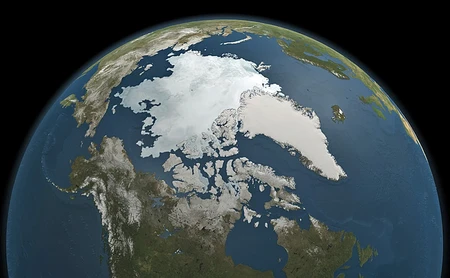
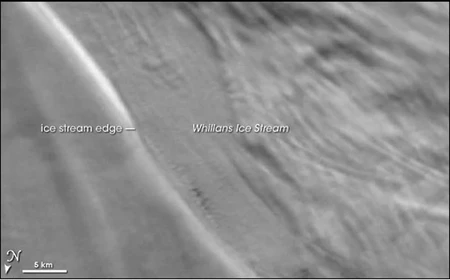
Ice Streams are essentially outlet glaciers within the ice sheet. They are fast large features however their boundary is strongly defined In addition they are easily recognizable from satellite images, shown below. Ice streams deposit about 90% of ice and sediment deposits from the Antarctic ice sheet. They are fed by tributaries that extend 1000km deep into the Antarctic ice sheet, evident from the map below. Typically, they drain into ice shelves or ice tongues.
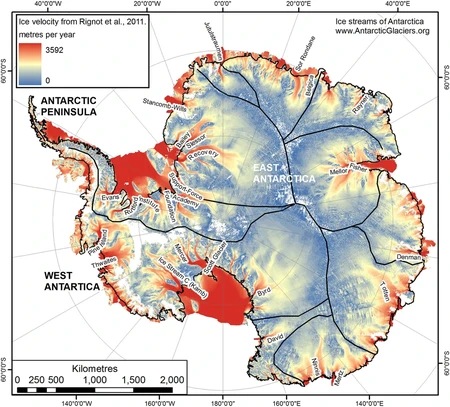
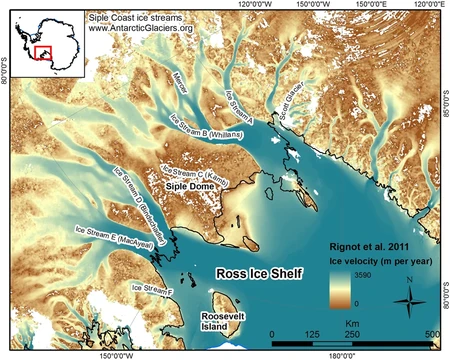
Siple Coast Ice Streams: Take a look at the above map again. Look at the big red spot in the south, that is the Ross Ice Shelf. Around the ice shelf we can see a series of Ice Streams, those are known as the Ross Ice Streams (Wow very creative name). The streams on the Western side of the ice shelf are known as the Siple Coast Ice Streams (Look where Ice Stream C (Kamb) is). This small area of Antarctica is extremely important as it discharges about 40% of the ice sheet as a whole.
The velocity of these glaciers are variable. Some of them are accelerating fast, such as ice stream D while others are decelerating such as Ice Stream B. These glaciers also have periods where they rapidly shut down due to their unstable nature. Ice Stream D shut down about 450 years ago.
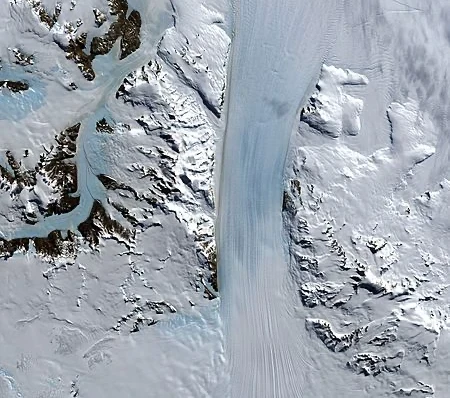
One really unique feature about these ice streams is that these are one of the few pure ice streams in the world. That meaning they have no topological boundary, eg. mountains or valleys. This property leads to increased Basal sliding, a process in which the sides and underneath of a glacier melts causing it to move, which then leads to increased speed. Byrd Glacier pictured above is not a pure glacier as it has topographical boundary of the mountains surrounding it. In contrast the Whillans glacier shows that it s bounded by ice.
Ice Tongues
When an ice stream, or any outlet glacier, hits the water its fast moving pace causes a portion of it to go over the water. That portion forms into a tongue like shape known as an ice tongue. They are a thin narrow strip and oftentimes form and are confined in valley walls. Below I have included an image of some ice tongues. Keep in mind their shape.
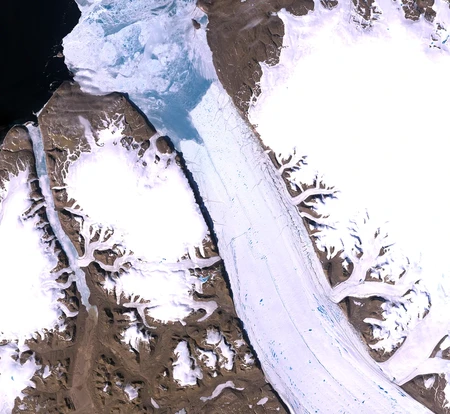
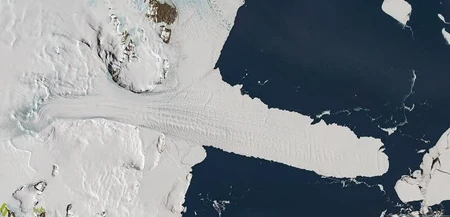
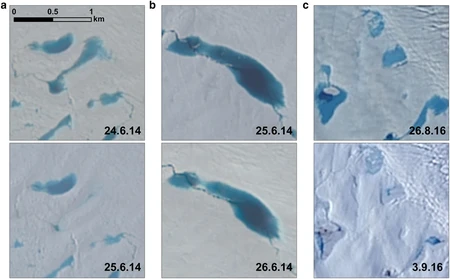
The way ice tongues melt is through simple surface melting or through basal melting, meaning that the ice melts from the top and the bottom. This can be shown through small surface lakes. In addition, Ice tongues can sometimes but rarely, calve icebergs, a process we'll go into more detail, later in this blog.
Ice Shelves
When ice tongues are thin strips of ice, Ice shelves are wider landmasses connected via an ice stream but still based on water rather than having a land base. Their formation is identical to those of Ice tongues however, ice shelfs are formed in large confined ways. In other words when an ice stream flows into a bay it confines within the bay's boundaries. This means multiple ice tongues stuck in this bay can converge to become a single ice shelf. This is what we see playing out with the Ross Ice shelf, being formed through the Ross Ice streams (Including the Siple coast ones).
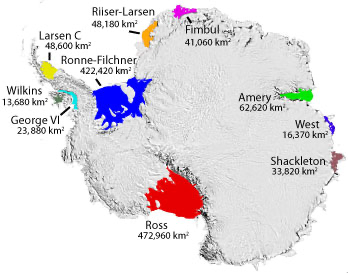
If you scroll up to the map of the ice velocities of Antarctica, we can see that there are huge red spots. Those are the ice shelves. Ice shelves and Ice tongues for that matter move insanely fast, (for ice at least). That is because when moving from land to water the friction decreases a lot, causing way faster movement. One reason why, ice shelves are so important is due to a process called Buttressing. This is essentially when an ice shelf, because it's confined in a bay, is pivoted to make physical contact with the bay wall. This causes immense lateral friction. This might confuse you as that I just made the claim it is frictionless, but what we will see is most motion happens in the middle of the ice shelf where friction is the least. On the ends though, the lateral friction causes it to act like brakes and then pushes back on the ice stream restricting its discharge, in. turn providing a safeguard from rapid sea level rise.
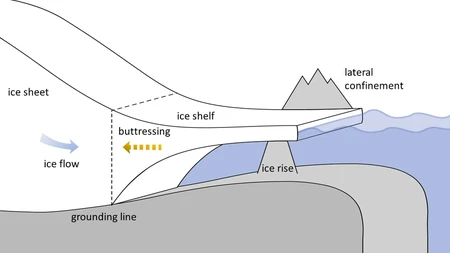
When ice shelves, lose their structural stability they can collapse really fast. To understand their collapse, we can mark it in three phases. First supraglacial lakes form and rifts start to develop. This can be due to the natural melting of the ice shelves. Secondly warm undercurrents such as the Amundsen undercurrent, push through these rifts in the glacier, melting it from the inside, causing it to destabilize. Once these rifts open up completely and the ice shelf detaches, then the buttressing force drops to 0 and the ice streams are going to flow 3 to 5 times more faster and therefore melt at that increased rate.
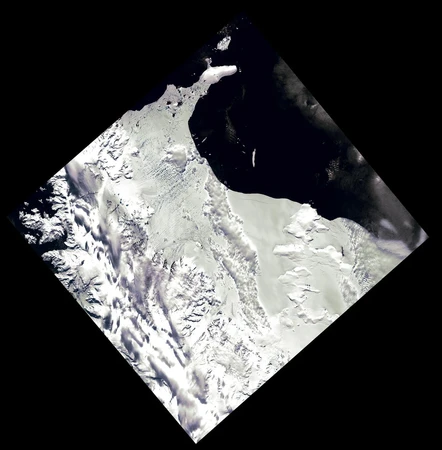
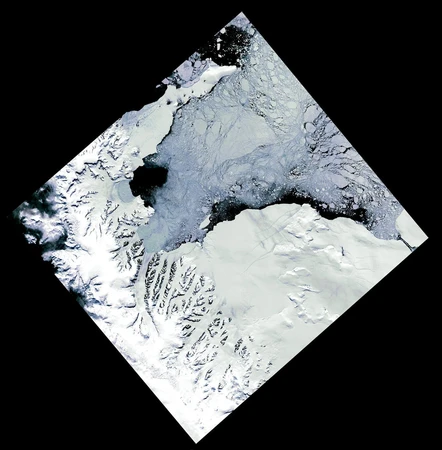
Even more apocalyptical, the conditions are currently perfect for the collapse of a major Antarctic iceshelf. Thwaites Glacier.
Icebergs and Calving
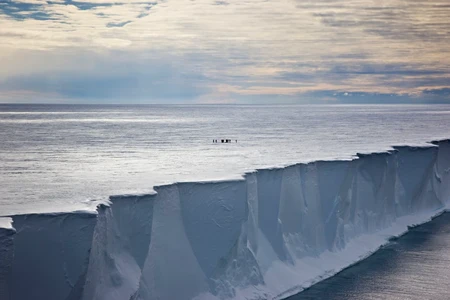
When the longitudinal forces of an ice shelf or tongue have a higher magnitude than the internal force of the ice crystals (that depends on the phase of ice its in, a blog for another day) it starts to rupture and break away into the ocean. This process is known as calving. Ice shelves are equipped with calving fronts, a fancy term for the side of the shelf facing the water. Calving is a natural process for all glaciers to expand must calve a little however if calving increases at a faster pace it can alarm glaciologists about the health of that given glacier. Calving can be accelerated by, faster melting, buoyancy snap, when an ice shelf extends to a deeper part of water and becomes highly buoyant, therefore bending the ice, causing it to rapidly calve and the opening of Moulins, vertical shafts in the glacier, pushes upwards causing instability and icebergs to calve.
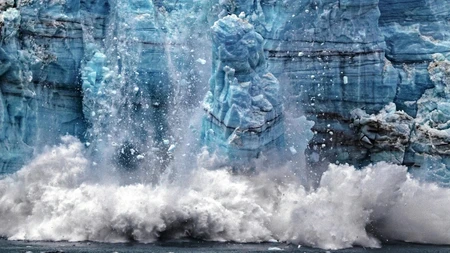
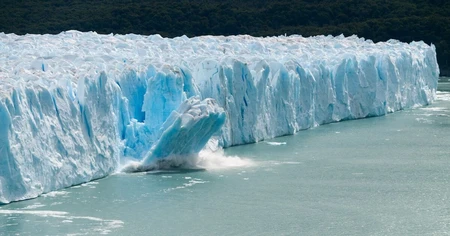
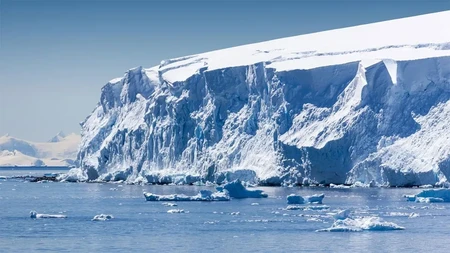
Pertaining to the types of icebergs, there are two types, well for what we will cover in this blog.. Those being Tabular and Non-Tabular. Tabular icebergs have steep vertical sides and a flat top and are solely calved by ice shelves. I remember this by Tabular Table as its appearance typically looks table like. Nom-tabular are really like any other kind of iceberg and can be calved from any calving glacier. Non-tabular can be divided into many more types of ice bergs but for the simplicity of this blog we won't get that into it.
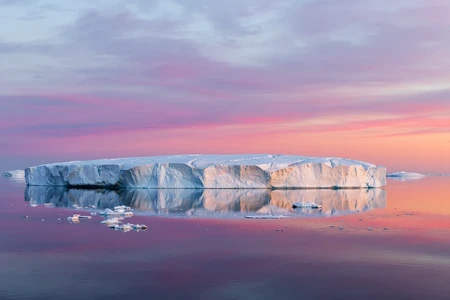
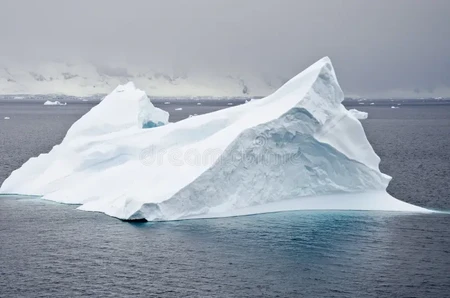
Now to end this blog, let's go into what happens after an iceberg is calved. First it drifts, the currents pulling it all over the water, then it starts to melt when it hits warmer water. Lastly the hot water will go into the iceberg and fragments it. Those steps are known as Drifting, Rolling and Fragmentation.
Conclusion
P.S: as for the survivor blog it is under unlisted, its sequal will come Monday
P.P.S: This blog is late because the survivor blog was late and I had to wait sometime to submit it as there is a rule in place as one blog per 24 hour period.
I genuinely like this blog, but please don't rush yourself to a schedule like this.
It's obvious from your blogs that you spend time and put enormous effort into them. It certainly pays off.
Looking forward to the next one already!