
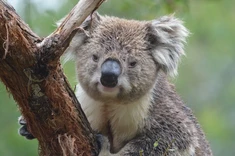
Only in Australia - Koala
First published: Thursday April 24th, 2025
Report this blog
The Koala – Ruler of the Treetops
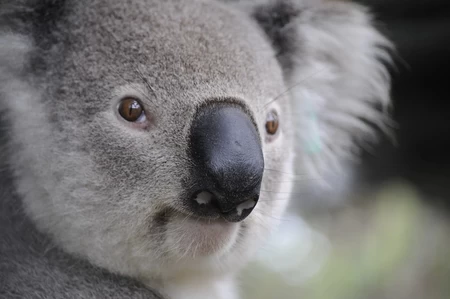
If there's one animal that captures the world's imagination when it comes to Australian wildlife, it's probably the koala. With their fluffy ears, button noses, and sleepy expressions, koalas have become international icons for the country, often being mistaken for teddy bears or labeled as “cute and cuddly.”
But there’s a lot more going on with these treetop dwellers than you might expect. Koalas are not bears (despite the persistent “koala bear” myth) and they’re not just lounging around for the fun of it. Everything about their biology and behavior is shaped by the challenging lifestyle they lead in the hostile environments of Australia.
In this edition of Only in Australia, we will look beyond their sleepy exterior to understand how koalas manage to survive and thrive on one of the world’s most limited diets and why they matter more than ever in for Australia's natural environment.
Eucalyptus Eaters
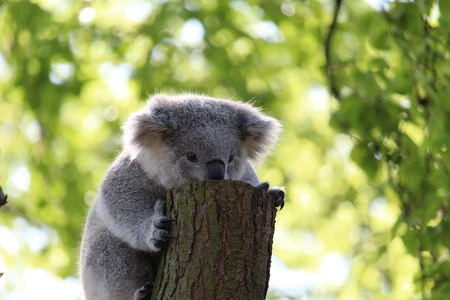
Koalas are famously picky eaters. While most herbivores enjoy a bit of variety, koalas have narrowed their diet down to mostly eucalyptus leaves. To take it even further, of the 700+ eucalyptus species growing across Australia, koalas tend to favor a short list of about 30, with personal preferences even within that short list.
Eucalyptus leaves are tough, fibrous, and full of toxin basically being the equivalent of putting cardboard soaked in cleaning fluid in your salad. But koalas have a digestive system built for it as their long guts and massive caecum (an internal fermentation chamber) are packed with bacteria that break down the leaves and neutralize toxins. Even so, eucalyptus doesn’t offer much energy, which explains why koalas spend so much of their time asleep.
Professionally Lazy
Koalas sleep up to 20 hours a day. However, it's not because they’re too lazy to bother; their food doesn’t give them much energy, so they’ve adapted to accommodate this by expending as little energy as they can.
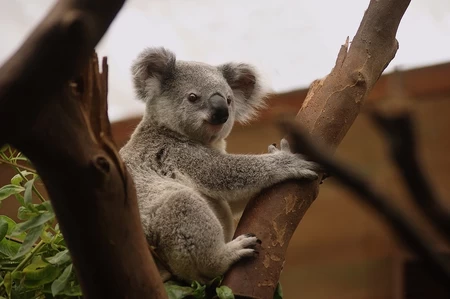
You’ll usually find koalas curled into the fork of a tree branch, limbs tucked in, completely unbothered by anything in their surroundings. Their thick, cushiony rumps rest on the bark like built-in beanbags, while their strong arms and opposable digits help them hold on to trees even mid-nap to ensure that nothing can disturb their beauty sleep.
When they are awake, koalas move deliberately. Every climb, stretch, or chomp is purposeful and economical with the goal of using as little energy as possible. They’re not in a rush and they’re not trying to impress anyone so there is no reason not to take their time.
Built-In Climbing Gear
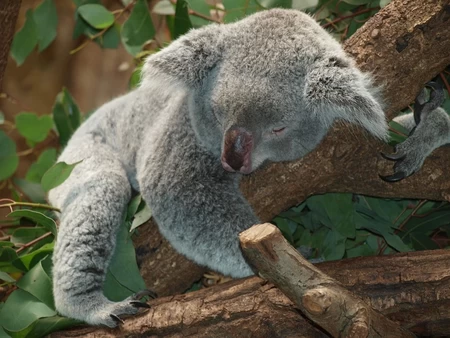
Koalas may look sluggish on the ground, but in the treetops, they are surprisingly agile. Their limbs are long and muscular, and their paws are like climbing tools since each front paw has two opposable “thumbs” and their back paws include a grooming claw and fused toes for extra grip on the branches.
Need to jump to the next branch? They can do it. Need to hang on tight during a strong wind? No problem for a koala. Koalas have the physical toolkit of a seasoned tree-climber and use it to quietly navigate their leafy homes without drawing much attention and with little to no risk of falling out of their trees.
And as a bonus, koalas can swim. They’ll cross water if they have to, especially during heatwaves or when changing territories making their swimming skills a useful bonus in times of trouble.
A Downward-Facing Pouch
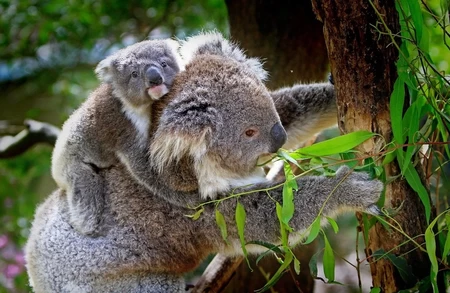
Since koalas are marsupials, they give birth to tiny, underdeveloped young (called joeys) who crawl into a pouch to grow and nurse. One thing that makes koalas different though is that they have a downward-facing pouch similar to a wombat. You may think that this would be a terrible design choice since they spend all their time climbing but the koalas actually have specialized muscles to hold the pouch closed while climbing so that the joey does not fall out.
The joey spends about six months inside the pouch, followed by another six or so clinging to its mother's back as it learns the ropes. During this time of weaning, the joey eats a substance called pap, a partially digested, bacteria-rich form of eucalyptus passed from the mother. It may sound gross, but it’s essential as pap seeds the young koala’s gut with the microbes needed to digest their leaf-only diet later in life.
Surprisingly Noisy
For an animal that spends most of its time dozing in the treetops, koalas are unexpectedly loud when they want to be. During the breeding season, male koalas produce a distinctive series of low, rumbling bellows that can travel for hundreds of feet through the forest. These sounds serve two main purposes for the koala: attracting females and warning rival males. Essentially it is the koala proclaiming, “I’m here, I’m big, and this is my tree.”
The sound is made possible by an unusually long vocal tract and specially adapted vocal cords located outside the larynx, something that is not seen in any other land mammal. This anatomical quirk allows koalas to produce sounds far deeper than their body size would suggest. If you’ve never heard a koala bellow before, it can be surprisingly unsettling sounding like something between a pig grunt and a revving motorcycle.
Scent Messaging
Koalas might not speak very often, but they certainly leave messages for each other. The message just might not be in ways we’d normally notice. Male koalas have a scent gland on their chest that oozes a sticky, musky substance. When they rub this across the trunks of eucalyptus trees, they’re basically putting up a sign that says, “This is mine” or “I’m around so come find me.”
Other koalas pick up on these signals by stopping for a sniff. From just a quick whiff they can tell who left the mark, how dominant he is, and whether it’s worth sticking around or moving on. This is also beneficial during breeding season as it helps female koalas easily find good matches based off how stinky they are.
What’s Threatening Them
Despite their popularity, koalas are facing serious threats in the wild. The biggest problem is habitat loss through deforestation, urban expansion, and land clearing which have all heavily chipped away at the eucalyptus forests they depend on.
Koalas are also vulnerable to disease, particularly chlamydia, which can cause blindness, infertility, and serious health issues. On top of that, they’re at risk from dog attacks, car collisions, and increasingly severe climate events like droughts and bushfires which all threaten their chill, happy lives. In parts of their range, koalas are even now listed as endangered, and conservation efforts are racing to protect remaining populations and the Eucalyptus trees they rely on.
Why Koalas Matter
Koalas aren’t just mascots of Australia but part of the fabric of the country's delicate ecosystems. As selective eaters and a flagship species, their health is often a good indicator of environmental wellbeing and they also play a crucial role in managing eucalyptus forests,
Their survival depends on healthy forests, clean air, and sustainable land use which are all things that benefit many other species, including us humans. When we protect koalas, we’re also protecting some of the last pockets of native bushland in Australia that support so many other creatures.
Fun Facts About Koalas
Koala fingerprints are nearly identical to humans’. They’re so similar that even forensic scientists have been fooled into thinking a koala fingerprint belonged to a human.
They barely drink water since most of their hydration comes from eucalyptus leaves. Koala roughly translates to “no water.”
Their brains are small and smooth. This helps reduce energy use, but it also means koalas aren’t known for clever problem-solving.
They sleep through almost anything. Wind, rain, heat, anything you can think of, and koalas just curl up tighter and ride it out.
Coming Up Next on Only in Australia
Next up, we’re heading to the island of Tasmania to learn more about the Tasmanian devil, a strange, scrappy little marsupial with a reputation that’s not entirely undeserved. They’re loud, messy eaters with surprisingly strong jaws and a way of life that’s unlike anything else in Australia. There’s a lot to learn about them, and probably a few things that’ll surprise you.
Coming up on Only In USA:
- Guns
- McDonalds every ten miles
- Guns
- The American flag, subjectively the best flag
- Guns
Thanks for sharing