

What is Happening With America's Footballing Golden Generation?
First published: Friday July 12th, 2024
Report this blog
History
The USA first fielded a national team on November 28th 1885, when they played Canada in a friendly match, losing 1-0, with Alex Gibson scoring the only goal of the game. The following year, the fixture was played again, with the United States emerging victorious in a 1-0 victory. In 1887, the two North American nations played again, this time, Canada smashed the Americans 5-0 but no international matches were played again until 1916. However, in 1904, the St Louis Olympics took place, and of the three teams entered (one from Canada and two from the US), the United States came second and third (or last and second last). The Canadian team, Galt FC, beat the American teams 7-0 and 4-0 respectively, but with no players in either of the American teams actually being professional (they represented colleges in the Olympics) , it was clear that soccer had little success among Americans. FIFA, the international football federation, was founded in 1904 and in 1914, the US was granted full membership. Two years later, they toured Norway and Sweden, playing both teams and beating Sweden 3-2 and drawing 1-1 with Norway.
In 1921, the USA set up the first professional football league: the 'American Professional Soccer League' (APSL). It consisted of a number of different teams, varying year by year with franchises changing hands and some leaving the league and rejoining under a different name, however it was very attractive to players from Europe due to the high wages. This lead to top level players from Europe playing in a less competitive league and as a result, a deep resentment for American football grew amongst European teams. In 1928, the APSL decided to boycott the Challenge Cup (American version of the FA Cup) however some teams, notably Bethlehem Steel, entered it anyway, defying the league. They were suspended by the APSL, and FIFA declared the league an outlaw league, which ultimately lead to the collapse of it, as fans didn't like the idea of a foreign body conspiring with their federation to control the sport.
Meanwhile, the national team had a great success. With the first World Cup being held in Uruguay in 1930, the US entered, and ended up finishing third, their highest finish to date, with forward Bert Patenaude finishing as top scorer.
The APSL was renamed to the American Soccer League in 1933, and it featured teams from the Northeast of the United States. Ultimately though, there was little controversy and football carried on as a professional sport.
The USA qualified for the 1934 World Cup, but got eliminated straight away by hosts Italy in a crushing 7-1 defeat. They didn't qualify for a World Cup until 1950 (largely due to the Second World War) where they pulled off one of the most shocking results in football history, beating England's well-established teams 1-0, however they were eliminated by Chile in a 5-2 defeat.
In 1961, CONCACAF (the North American football federation) was recognised by FIFA, which allowed them to play more frequently against nations on their continent. However, until 1982, only one team from CONCACAF was able to qualify for the World Cup, and due to their love and obsession with football, it was Mexico each time. To try and build up a team and fanbase again, the US federation decided to target the 1984 Olympics in Los Angeles and 1986 World Cup as a way to regain momentum. The Americans had a strong showing at the Olympics, beating Costa Rica, tying with Egypt and losing to Italy (one of football's most dominant teams) and whilst they unsuccessfully bid to host the 1986 World Cup, they narrowly missed out on qualifying as they were beaten 1-0 by Costa Rica.
Nevertheless, the US were selected to host the 1994 World Cup, and they made a return to the competition after over 40 years of absence. They drew with Switzerland 1-1, beat Colombia 2-1 and drew with Romania 1-1 to qualify for the round of 16, where they were knocked out by the eventual champions, Brazil with a 1-0 scoreline.
As part of the terms of being a World Cup host, the US had to establish a Division 1 Soccer League, as previously there hadn't been a dominant outdoor league. In 1996, the MLS (Major League Soccer) was launched, and after the 1994 World Cup, several marquee players such as Alexi Lalas, Jorge Campos and Carlos Valderrama were lured to the league.
It was also around this period that the Gold Cup was founded, a CONCACAF competition which was only really contested by the United States, Mexico and occasionally a third team such as Costa Rica or Canada. Their dominance meant that eventually the USA outgrew the Gold Cup, and didn't regularly play teams of their level, but it did mean that they regularly qualified for the World Cup.
The 2010 World Cup saw the US drawn in a group with England, Slovenia and Algeria. With draws against England and Slovenia, the US beat Algeria 1-0 with a stoppage time goal by Landon Donavon to qualify for the round of 16, where they fell at the sword of Ghana.
In the 2014, World Cup, the Americans beat Ghana, lost to Germany and drew to Portugal in the group stage and got knocked out in extra time by Belgium in the round of 16. They weren't very successful, but they had become a regular World Cup team and a force to be reckoned with, however, the following years brought all of their progress to rubble.
The 2018 World Cup
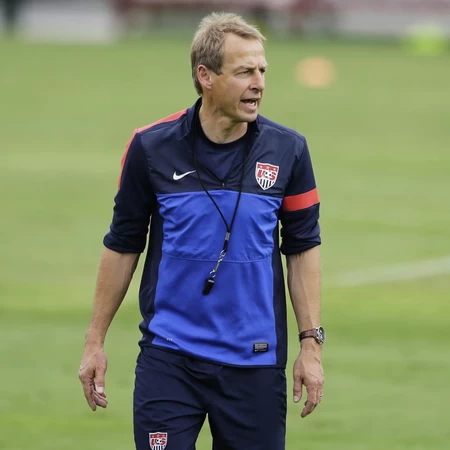
Due to their place in the FIFA rankings, the USA had a bye to the fourth round, along with Mexico, Costa Rica, Panama, Trinidad and Tobago and Honduras. They were then placed in Group C, along with Trinidad and Tobago, St Vincent and the Grenadines and Guatemala, which they topped. This meant that they played in the fifth and final round of the qualifiers, of which the top three teams would qualify and the fourth would enter the inter-continental playoff. On matchday 1, the US lost to Mexico, an expected result which wouldn't worry them too much. On matchday 2, Costa Rica hosted Jurgen Klinsmann's side, thrashing them 4-0, the manager said that the defeat was "A very, very bitter moment for us." and he was sacked 6 days later, being replaced by LA Galaxy manager Bruce Arena. The rest of the qualifying campaign was expected, with losses to big teams and wins against lower ranked opposition, however on matchday 10, the biggest shock of all came. Bruce Arena's side lost 2-1 to Trinidad and Tobago, finishing in 5th place overall, and missing out on automatic qualification as well as the playoff. 3 days later, Arena resigned and eventually Gregg Berhalter was appointed head coach, but the damage had been done and US soccer was on a downwards slope.
The Golden Generation - A New Hope?
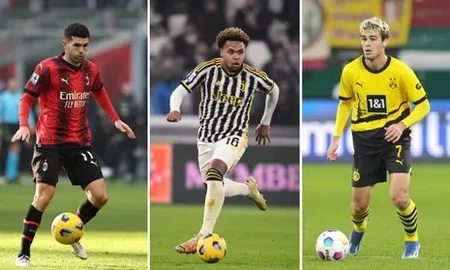
Following their exit from the 2018 World Cup, the US began to see a number of young talents coming through:
Christian Pulisic - Started his career at Borussia Dortmund, and joined Chelsea, where his career started to go downhill, but he has become a wonderful talent on the wing in the last year with AC Milan. Nicknamed Captain America, and seen as the talisman to the USMNT.
Weston McKennie - The central midfielder joined Italian giants Juventus from Schalke 04 in 2020, and has become a starter for the Italian team, with half a season of Premier League experience under his belt with Leeds.
Giovanni Reyna - As a teenager, he joined Dortmund and made over 120 appearances for the German behemoths. His progress has slightly faltered at club level, with an uninspiring 10 games on loan at Nottingham Forest, but he is just 21 years old and can play anywhere in midfield or on the wing.
Tyler Adams - A product of the Red Bull project, Adams transferred to RB Leipzig in 2019, where he caught the eye of Leeds United. He spent a season in Yorkshire before transferring to Bournemouth, where he became a crucial fixture in Andoni Iraola's side as a defensive midfielder.
Sergiño Dest - On club level, things haven't worked out for Dest, as the right back has been sent on loan from Barcelona to AC Milan and PSV Eindhoven, failing to really cement himself as a quality player, however his top level experience has paid dividends for the USMNT, as he has made 33 appearances for them.
Yunus Musah - Another player at AC Milan who has been great for the USA is Yunus Musah, who is a central midfielder who has played 40 times for them since joining from Valencia.
Timothy Weah - Weah is the son of Liberian legend George Weah, and whilst he hasn't quite had the career of his father, he has been a solid player on the wing for Juventus as well as Lille, Celtic and briefly PSG.
This group of players has been accompanied by an old guard made up of veterans like DeAndre Yedlin, Tim Ream and Sean Johnson but also other young players in Europe, such as Matt Turner, Antonee Robinson, Brenden Aaronson and Folarin Balogun. Going into the 2022 World Cup under manager Gregg Berhalter, there was a lot of belief that the US could be a dark horse, and they drew with England and Wales in the group stages, beating Iran until they were drawn with the Netherlands in the round of 16. The Dutch were simply to good for America's plucky young team, who crashed out with a 3-1 defeat. The result wasn't a shock - the Netherlands have been a top team for a long time, and had some of the best players in the world on their side, and they outclassed the US in all areas of the pitch. The future looked bright for these players, with the 2024 Copa America on the horizon...
Copa America 2024
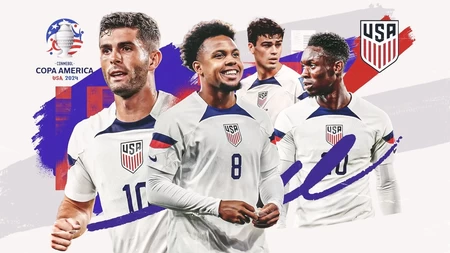
Typically, the Copa America takes place every 4 years between the nations of South America, but as there are only 12 of them, they often have invitees. In 2024, they invited some CONCACAF nations to participate and the USA, Canada, Mexico, Panama, Costa Rica and Jamaica all featured in the tournament. Strangely, the US also hosted, taking relief off Brazil and Argentina who had previously hosted it most editions due to a lack of infrastructure and also peace in the other South American countries. The US (rank 11) were placed in Group C, along with Uruguay (rank 14 - although it should be higher), Panama (rank 43) and Bolivia (rank 84). The expectation was certainly that the US would qualify for the quarter finals, or even top the group. After a convincing 2-0 win against Bolivia, there was still a lot of hope for their match against Panama, who had 1 player in a European top 7 league, however in a shocking turn of events, they lost 2-1 with an 83rd minute goal from Panama, who were far superior on the day. They had to beat Uruguay to get through, but as Marcelo Bielsa's team had only lost twice since the World Cup, there wasn't much hope - and despite a good showing from goalkeeper Matt Turner, Uruguay won 1-0, knocking the USA out of the Copa America. The blame has largely been given to Gregg Berhalter and his tactics, whilst some have put it on individual players, notably Timothy Weah, who was sent off early against Panama. Berhalter was sacked after the United States's exit, but there does seem to be some worry surrounding the team.
The Future...
In June 2018, the United States were announced as joint hosts of the 2026 World Cup, along with Canada and Mexico. Most of the matches will take place inside the USA though, and 11 of the 16 host cities are American. As a result, the pressure is on the US to become a competitive team, unlike the previous hosts - Qatar, who crashed out with no games won. The US qualifies automatically in Group D, but with the confidence of their players likely to be hit hard by their Copa America exit and need to find a new coach quickly, the future could be dark. On 11 July 2024, it was reported that the legendary manager Jurgen Klopp rebuffed interest in being the head coach, and with no clear direction for the future, many fans are pessimistic about the tournament. Still, not all is doom and gloom: the MLS is growing rapidly, especially after the transfer of Lionel Messi to Inter Miami and as many young Americans are playing in Europe, there could be fierce competition for their World Cup squad. Ultimately, the soccer in the US has grown a lot since its beginnings and whilst the national team has had some major setbacks, the future is looking bright, and 2026 could be a great year for them.
On the other hand, I don't think the USA will make a great team that will do wonders any time soon, due to the fact that Americans like basketball and other sports more, in comparison to Europe.
For the 2026 WC I feel like the US will reach the round of 16, but lose