
Country and Flag Origins - Part K
Last updated: Thursday April 10th, 2025
Report this blog
Introduction
When I was at primary school, way back in about 1967, we were taught the difference between K and C. As both have a similar sound in lower case. We learnt that C was "Curly c" and K was "Kicking k". I don't know why I mention this, it was just what entered my head when thinking what to type. I think that most of you know my style by now, and know that I go off at a tangent occasionally. The teacher that taught me this was Mr. Appleton, I still have no idea what his first name was, it was unheard of in those days to be informal with teachers. Mr. Appleton had lots of tales to tell of the Second World War, this was only a little over twenty years after the end of that conflict, especially about his role as a rear gunner on a Lancaster bomber!
But enough of my reminiscing, we're here to learn. There are six entries in this blog, we start in Asia with the world's largest landlocked country...
Kazakhstan
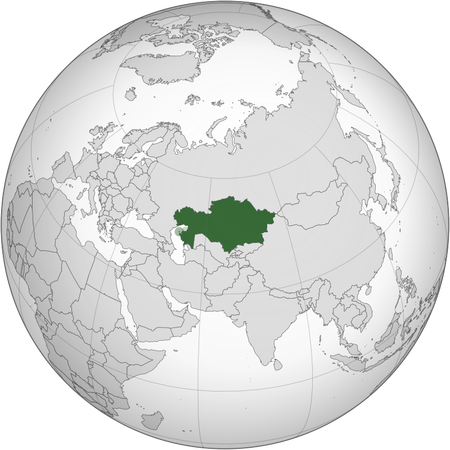
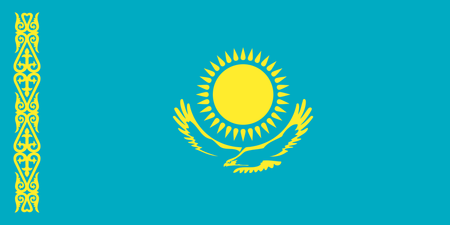
The flag of Kazakhstan was introduced following the breakup of the Soviet Union in 1992. The blue colour is of religious significance to the ethnic Turkic people and represents cultural and ethnic unity, as well as water and the sky. To the left of the flag is a design in gold called koshkar-muiz meaning the horns of the ram. The golden sun is a symbol of wealth and prosperity, whilst the rays are in the shape of grain to signify abundance. The eagle has been used by Kazakh tribes for centuries and represents freedom, power, and the flight to the future.
As with all of the other "stan" countries, the -stan part means "place of" or "land of". The Kazakh part is the name of the people that lived there, although the name Kazakh derives from the Russian казах. This may come from the Turkic verb qaz meaning "to wander", reflecting the Kazakhs nomadic existence.
KAZAKHSTAN = LAND OF THE KAZAKHS or LAND OF THE WANDERERS
Kenya
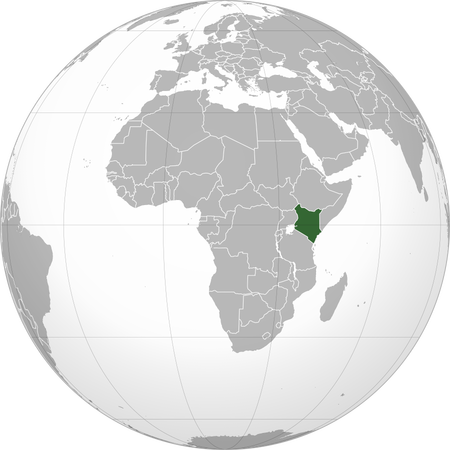
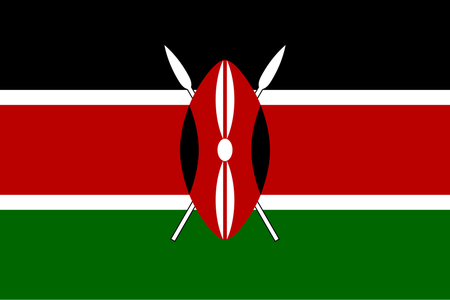
The flag was adopted on Kenya's independence in 1963 and is based on the Kenya African National Union, a political party that were in power from independence right up to 2002. The black colour represents the African continent, red stands for bloodshed during the fight for independence from colonial Britain, the green symbolises the country's wealth and landscape. The white stripes represent peace, purity, honesty, and innocence. The symbol of the Maasai shield and crossed spears represent the defence of all the above things.
The earliest recorded mention of the name Kenya came from a German explorer, Johann Ludwig Krapf, in the 19th century. Whilst travelling in a caravan led by Chief Kivoi, he spotted a mountain and asked it's name.He was told "Kĩ-Nyaa" or "Kĩlĩma- Kĩinyaa" describing the black rock and white snow to be like the feathers of the ostrich. A later map called the mountain Mt Kenya, it was accepted as the name of the mountain and as the name of the country as a whole.
KENYA = NAMED AFTER MOUNT KENYA
Kiribati
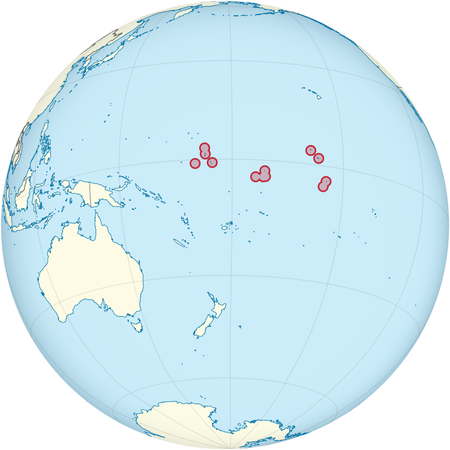
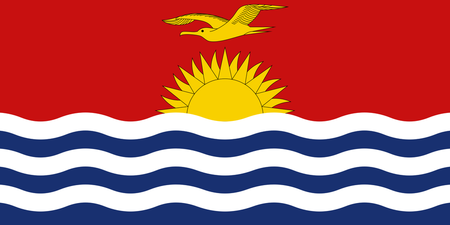
The red of this flag represents the courage of the nations people, as well as the bloodshed in the fight for independence. The wavy blue and white lines symbolise the Pacific Ocean, and because there are three lines, the three archipelagos of Kiribati, the Gilbert, Phoenix, and Line Islands. The sun represents the nations position straddling the equator and the 17 rays stand for the 16 Gilbert Islands plus Banaba, the island that is furthest west in Kiribati. The frigate bird symbolises command over the sea, freedom, and dance patterns.
The name Kiribati is a local pronunciation of Gilberts. It is pronounced KIRR-i-bass. -ti in Gilbertese is pronounced as an s sound. The Gilbert Islands were named after a British captain from the 18th century, Thomas Gilbert. He sighted and named the islands in 1788, whilst en route from Australia to Hong Kong.
KIRIBATI = NAMED AFTER THOMAS GILBERT
Kosovo
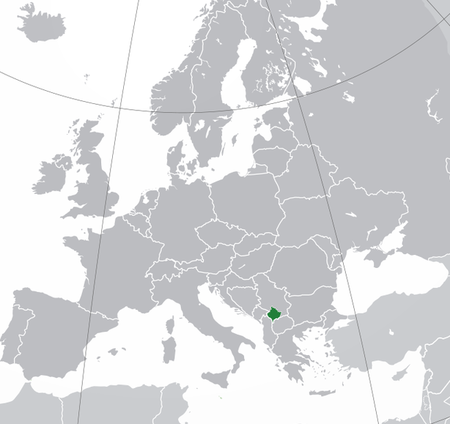
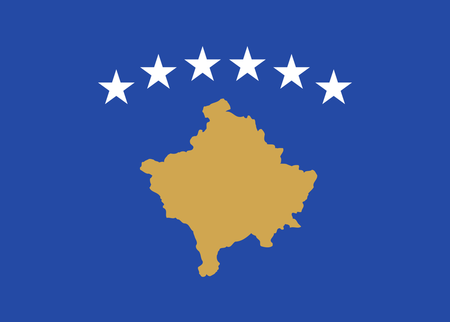
The flag of Kosovo was adopted on the day of the nation's independence in 2008. It was the result of an international competition held by the Kosovo Unity Group. there were over a thousand entries. The designer of the flag, Muhamer Ibrahimi, stated that the blue background symbolised Kosovo's "aspirations to move towards Euro-Atlantic institutions", presumably meaning the European Union and NATO. The country shape obviously represents the country, much like the only other country to do the same, Cyprus. The white stars are representative of the six ethnic groups in the country, Albanians, Serbs, Bosniaks, Turks, Romani, and Gorani.
The name of Kosovo is of South Slavic origin and is an adjective of kos, meaning "Blackbird" and comes from the name of a large field in the east of the country that was the site of a battle in 1389, The Battle of Kosovo Field, which was fought in "Blackbird Field"
KOSOVO = BLACKBIRD
Kuwait
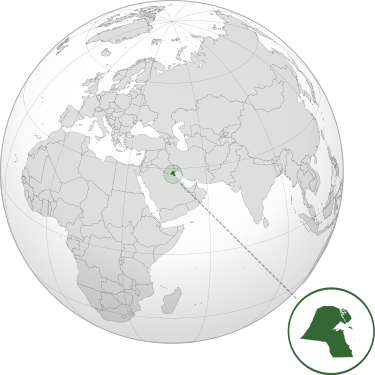
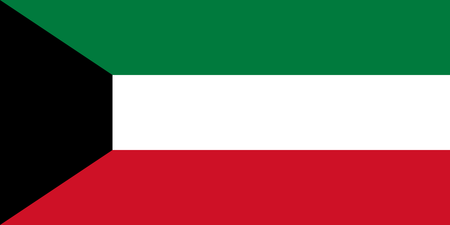
Like the Jordanian flag in the last blog, the colours of Kuwait's flag represent various Caliphates, as well as the red standing for the blood on the swords of Muslim warriors, the green representing the fertile land of Arabia, the white for purity and noble deeds, and the black for the defeat of enemies in battle. It is the only flag to feature an acute trapezium.
The name of Kuwait comes from the Kuwaiti Arabic dialect. It derives from the diminutive form of كوت (Kut or Kout) meaning "Fortress built near water"
KUWAIT = FORTRESS BUILT NEAR WATER
Kyrgyzstan
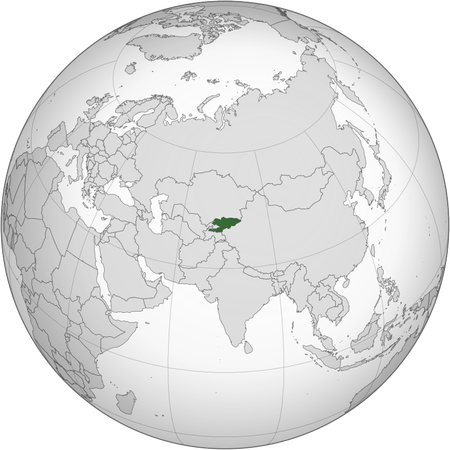
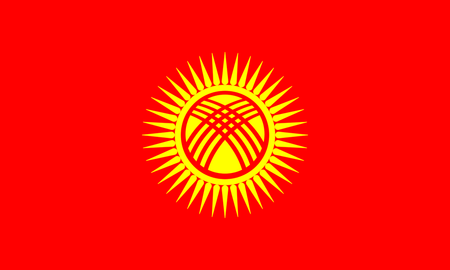
The red field of the Kyrgyz flag stands for bravery and valour and refers to Manas, the national hero of Kyrgyzstan. The sun design epitomises peace and prosperity. It is made up of forty rays that represent the forty tribes that were united by Manas in the fight against the Mongols. The criss-cross pattern in the centre is said to resemble the top of a traditional tent, a yurt, when viewed from within. The use of this design is to symbolise the origin of the people and their home. Until 2023, the rays of the sun were wavy, but this was thought to resemble a sunflower, which in Krygyz culture signifies "a fickle and servile person willing to switch allegiance for personal benefit".
As described earlier in the article for Kazakhstan, the -stan suffix means "land of". The name Kyrgyz is thought to derive from the Turkic language word for "We are forty", which again refers to the forty tribes united under Manas as mentioned above.
KYRGYZSTAN = LAND OF THE FORTY TRIBES
Summary
During the last entry, I had to constantly keep stopping my creative flow, just to check on the spelling of Kyrgyzstan. I suppose I could have just typed anything, like in the COTW quiz, you know, like Kyrganythingwilldoherestan or some other concoction, but no. I thought, if you guys are going to take the time to read this blog, then I should at least make the effort to spell the country names right. I think I made the right decision.
So with the end of the K countries and L being next, we are nearing the centre point of the alphabet. Although there are some big hitters on the horizon. I've worked out a plan and the next four blogs in this series will be longer (L-9, M1-8, M2-9, N-11) before a brief respite with Oman all alone. Because of this there may be a little longer between blogs, I envisage each one taking about a week to complete, work permitting.
That will do us for now I think. Just time to say adios, sayonara, and cheerio!
i don't think you can
That's not a moon, that's a space station! It even has a picture of Darth Vader's helmet on it
Never thought of it as a space station, it does resemble the Death Star.
That's no moon
ITS A MOONno, you're right it is a space station, We're all doomed, doomed I tell ya.An editing note: You wrote Kiribat instead of Kiribati in the final meaning for that entry. A minor error but I thought you'd want to know, and make the blog series even more perfect.
Also, you are likely to pass Astana as the user with the most blogs soon, as her publishing rate has dropped off significantly
I don't consider that I'm in a race to the most blogs but, yeah you could be right.