
Country and Flag Origins - Part S3
First published: Wednesday May 14th, 2025
Report this blog
Introduction
At the time of writing, it is a nice warm evening in the United Kingdom, well in Cheshire it is anyway. My evening meal, lovingly prepared by my wife, was a chicken salad with all the usual salad items, you know, tomatoes, onion, lettuce, coleslaw, new potatoes, and peppers. It was very nice, sat in the garden eating, and listening to the magpies that have decided to grace me with their presence and nested in the hedge at the bottom of the garden. There are also robins, and sparrows, all living in perfect harmony with each other, although they can be quite noisy neighbours at times. I have also discovered a problem with the outdoor table, it's too flimsy, I shall have to replace it with a sturdier variety. With better chairs as well. I don't know how we survive with all these first world problems.
Still, best get on with it I suppose, here's the first of the last, if you know what I mean....
South Korea
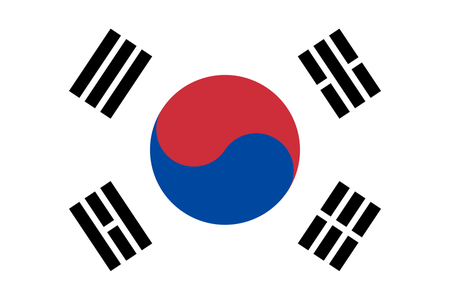
I have a small confession to make before I start this section. When I was younger, and I mean a lot younger, I used to think this flag had something to do with cricket. I used to think it was a ball and wickets. If there are any Koreans reading this, I apologise profusely!
The flag of South Korea originates from the Joseon Dynasty that ruled for over 500 years from 1392. It was first adopted nationally in 1883. The white background represents peace and purity and is also a traditional colour worn by 19th century Koreans. The circle in the centre, or yin and yang symbol, stands for harmony in the world, blue for negative energy and red for positive energy. The trigrams around the central symbol represent the four classical elements (air, earth, water, and fire) as well as the four seasons, the four directions, and several other meanings.
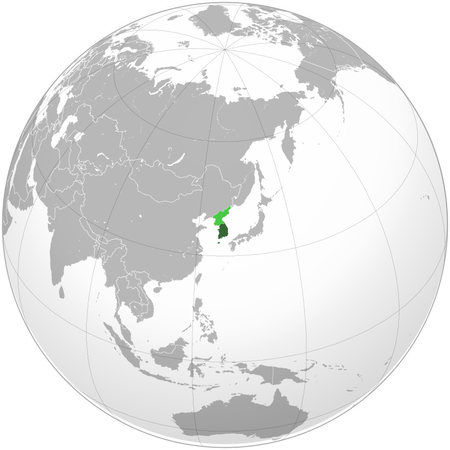
The name of South Korea denotes it's geographical location in the south of the Korean peninsula. However, Korea was originally called Goryeo, and this was mispronounced by Arab and Western traders as Korea or Corea. Goryeo evolved from Goguryeo meaning "high castle".
SOUTH KOREA = HIGH CASTLE OF THE SOUTH
South Sudan
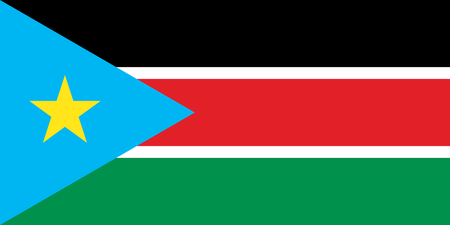
Although the country became independent in 2011, the flag predates the nation and was flown for the first time in 2005, when a peace agreement was signed after the Second Sudanese Civil War. The South Sudanese government has decided what the colours represent. Black is for the people of South Sudan, Red stands for the blood lost in the fight for independence, green is for the agriculture, land, wealth, and progress. The white stripes represent peace, and the blue is for the River Nile, while yellow symbolises unity, hope, and determination for all people.
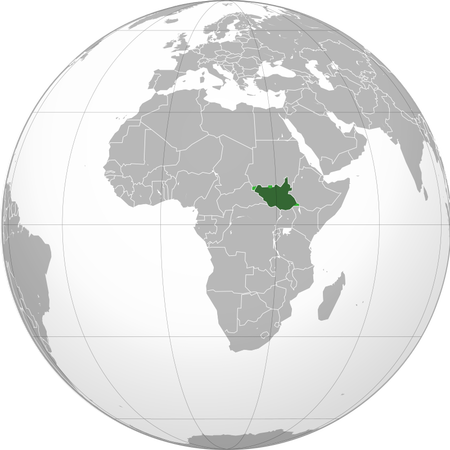
Once again, the name of the country is geographical, however Sudan derives from the name given by Arabs for the area south of the Sahara. It comes from the Arabic bilād as-sūdān meaning "Land of the Blacks"
SOUTH SUDAN = SOUTH PART OF THE LAND OF THE BLACKS
Spain
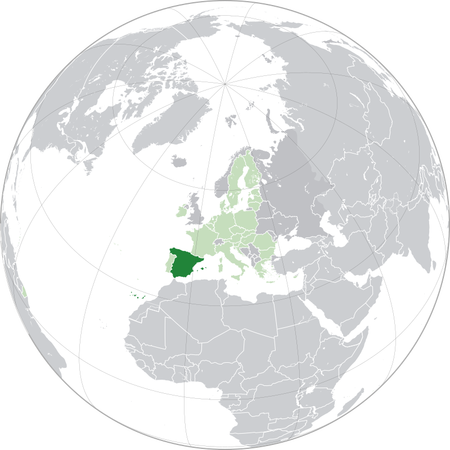
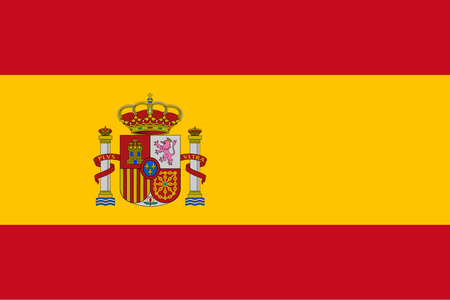
The Spanish flag was adopted in 1785, the current coat of arms was added in 1981. The background red and yellow colours are traditional Spanish colours that stretch back many centuries, they are thought to represent the unity of the people and nation.
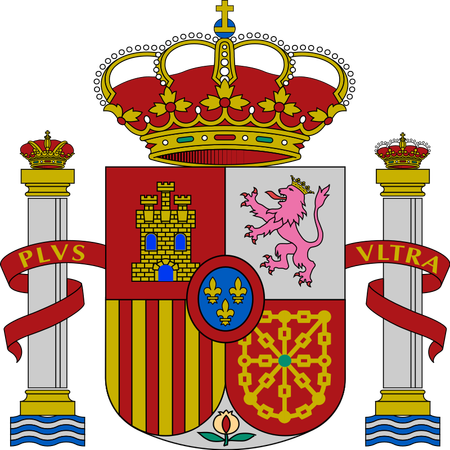
The coat of arms is a combination of the six coats of arms of the six nations that contributed to the formation of Spain. The castle symbolises the Kingdom of Castile, the lion represents Leon, the red and gold stripes are for Aragon, the golden chains are for Navarre, the pomegranate is for Granada, and the fleur-de-lis (or flower of the lily) is for the House of Bourbon. The pillars of Hercules represent the Strait of Gibraltar, which was the traditional boundary of the known world.
Spain's name comes from the Roman name for the region, Hispania. The origin of Hispania has two theories, the first is that it derives from the Phoenician name for the region, i-shphan-im meaning "land of rabbits". In fact some Roman coins struck in the region during the reign of Hadrian have a female figure with rabbits at her feet on them. The other theory is that the same Phoenician name actually means "land where metals are forged" referring to the gold mines on the Iberian Peninsula.
SPAIN = LAND OF RABBITS or LAND WHERE METAL IS FORGED (I know which I like)
Sri Lanka
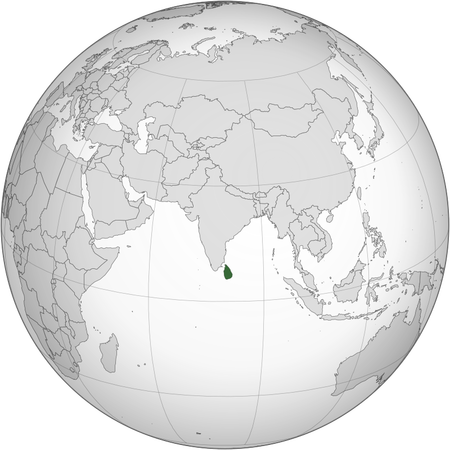
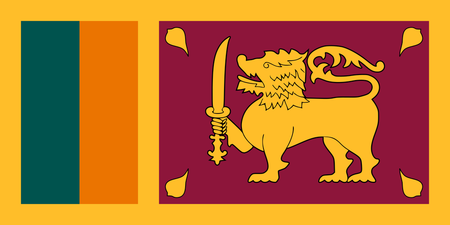
The lion and maroon background represent the Sinhalese race, which makes up around 75% of the Sri Lankan population. The four leaves symbolise the four Buddhist virtues of kindness, compassion, joy, and equanimity. The orange stripe represents the Tamil inhabitants, and the teal coloured stripe stands for the Muslims of Sri Lanka. The golden border encompasses all other minorities living in Sri Lanka.
Sri Lanka's name comes from two Sanskrit words, Sri and Lanka, obviously. Lanka means "island". Sri can be translated in a couple of ways, it can mean "holy", "beautiful", or "resplendent".
SRI LANKA = HOLY ISLAND or BEAUTIFUL ISLAND or RESPLENDENT ISLAND (I'll let you decide)
Sudan
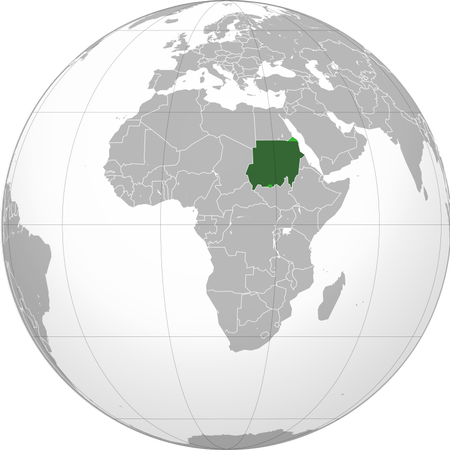
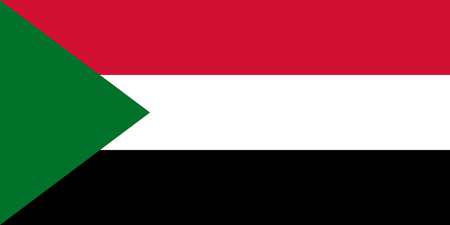
Sudan's flag is based on the Arab Liberation flag of the 1952 Egyptian Revolution. It was first used in 1970. The colours are the same as used by the pan-Arab movement and are linked to Islam and Arab peoples. The red colour stands for the struggles for independence and sacrifices made by the country's martyrs. The white colour represents people, light, and optimism, as well as the White Flag League, a nationalist group against colonial rule. The black colour represents Sudan, and the flag of nationalists in the 19th century. The green colour stands for Islam, agriculture, and the prosperity of the land.
As we discovered in the etymology of South Sudan, Sudan means "land of the blacks"
SUDAN = LAND OF THE BLACKS
Suriname
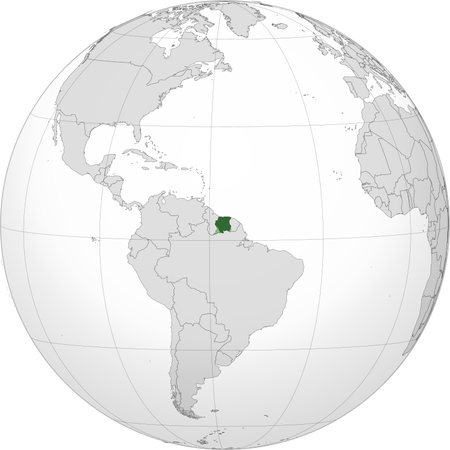
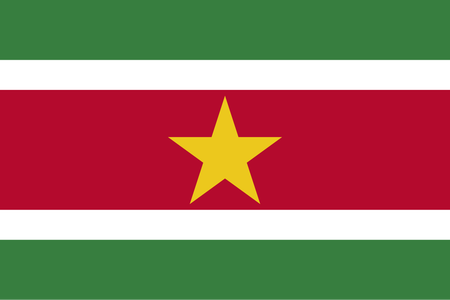
The flag of Suriname was adopted in 1975 when the nation became independent from the Netherlands. The flag was designed by an art teacher, Jack Pinas, in a competition held nationally. The red colour represents progress, the white stripes stand for freedom and justice, and the green symbolises the fertility of the land. The yellow star represents unity and a golden future.
The name of Suriname is thought to derive from the name of indigenous peoples when the land was first visited by Europeans, the Surinen tribe. The suffix -ame may come from aima or eima, meaning "river mouth" in the local Arawak language. Most early European sources suggest that Suriname was the name of the river flowing through the region. There are various spelling of the name of the river, but all are similar to Suriname. The origin of the name of the river was said by English sources in the 19th century to have come from being named after the Duke of Norfolk and Surrey in 1660, this involves the spelling Surryham that was used in some manuscripts.
SURINAME = MOUTH OF THE RIVER SURINAME or NAMED AFTER DUKE OF SURREY
Sweden
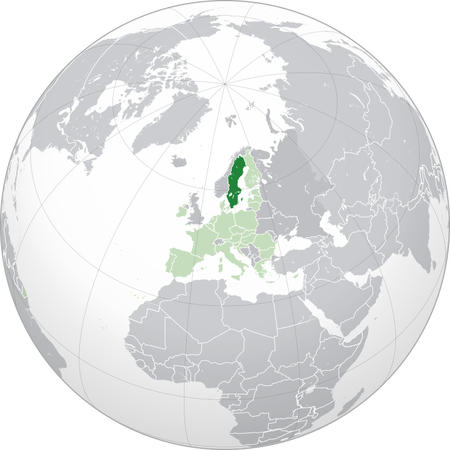
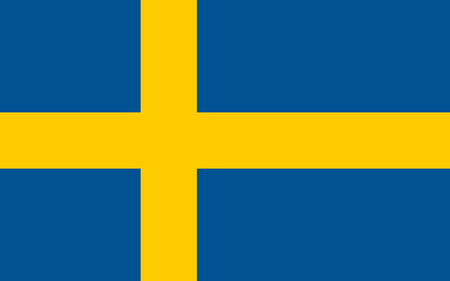
The Swedish flag has it's origins in the coat of arms of Magnus III in 1275, the Nordic Cross features in the current coat of arms of Sweden, designed in 1442. The Nordic Cross design traditionally represents Christianity. According to legend, King Eric IX in 1157, saw a golden cross in the sky during the First Swedish Crusade when he landed in Finland. He saw this as a sign from God and adopted the design for his banners.
The native name for the country is Sverige which is a compound of Svea and rike which translates to "Realm of the Swedes" The name Sweden derives from the same root that means "one's own" presumably a reference to their own people. In 1287, the Middle Dutch language referred to a lande van sweden or "Land of the Swedes"
SWEDEN = REALM OF OUR OWN TRIBE
Switzerland
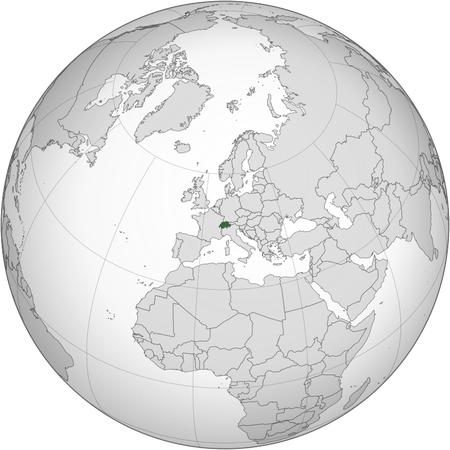
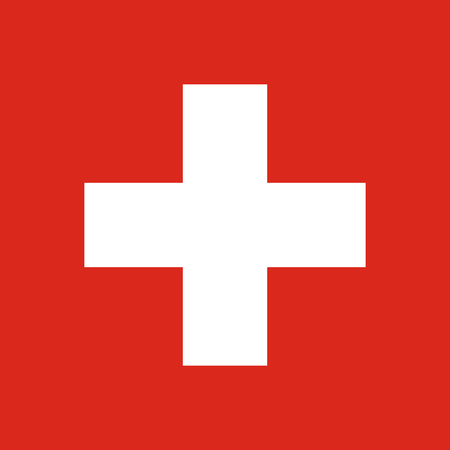
The white cross was added to a solid red war flag of the Swiss Confederacy in 1339 to distinguish combatants from their opponents. The cross is a Christian symbol and it's white colour now is a symbol of freedom, honour, and fidelity. The red background represents bravery and valour.
The English name of Switzerland derives from the Old High German name of Schwiizer that referred to a native of Schwyz, a town and canton in the centre of modern day Switzerland. Schwiizer is thought to derive from the word suittes meaning "to burn" referring to the way locals would slash and burn an area of land for habitation.
SWITZERLAND = LAND OF THE SWISS
Syria
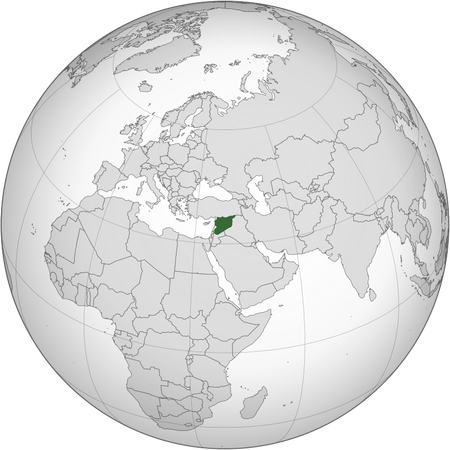
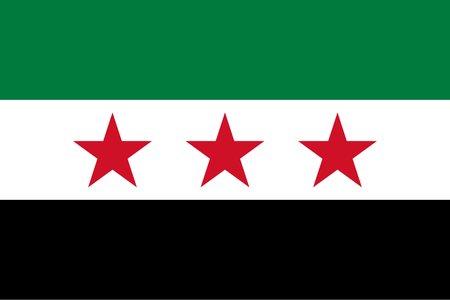
The flag of Syria is the flag first used after independence from France in 1946, following various regime and flag changes, it was readopted in early 2025. The colours are the pan-Arab colours as used in various nations. In this instance the colours represent the Rashidun caliphate (green), the Umayyad caliphate (white), the Abbasid caliphate (black). The three stars represent the three original districts of Syria, Aleppo, Damascus, and Deir ez-Zor.
The name of Syria derives from the Old Greek name for the Levant, Assyria. It is thought that this name originated in the 14th century BC or even earlier. At this time, Assyria was referred to in official documents as māt Aššur which means "Land of Ashur". Ashur was a god of the Assyrians until their conversion to Christianity in the 5th century AD.
SYRIA = COMES FROM ASSYRIA
Summary
It's three days since I wrote the introduction, the weather is still glorious, although there is talk of a drought in the summer. Something the farmers of the country are dreading, spring in the UK was the driest since, I think I heard, 1921. A good few days of rain are much needed in the fields for the crops. I know other parts of the world are a lot worse off, but this is Britain, it's supposed to be a "green and pleasant land", well, according to a poem by William Blake it is. The poem is now a hymn called Jerusalem, which is often stated to be more popular than the National Anthem of "God Save the King/Queen" and should replace it. It is a rousing patriotic tune that is often performed at the "Proms" at the Royal Albert Hall in London.
Anyway, enough nostalgia, that's it for the S countries. The trilogy is done. Next up, T. The last, long blog with eleven entries, from Taiwan to Tuvalu. Every one after that is quite short, especially Y, but that's for another day.
I have started my research for the next series after the conclusion of this one in a few weeks. I can officially announce that I will be reviving the Five Islands series, but with a few twists. They won't be about countries as such. The older series concentrated on islands of certain countries or areas, these will be about other stuff, but still islands. I have thought about tidal islands, islands with volcanoes, islands in lakes, or rivers, or above a certain altitude, or islands that were prisons, well you get the idea. There might also be a few stand-alone blogs about various unrelated subjects, just like I did when I was doing the last Five Islands series.
That will do for now, time's ticking on. See you next time!