

Five Villages of England
First published: Saturday January 31st, 2026
Report this blog
Introduction
A few years ago, back at the beginning of 2022, I started writing this Blog about the smaller islands of the United Kingdom. This grew into this series of blogs about small islands around the world. Fast forward a few years to the present day, and following a short discussion on the Message Board with you good people, I decided upon a path I should follow.
I decided amongst other things that I would write a few one-off blogs about various subjects, and I would try to start a short series of blogs about the smaller places, or villages, in the UK. Well, for now. If the next few blogs in this series are successful, I may move onto mainland Europe.
I shall be looking at five villages in each blog, starting obviously, with England rather than the British Isles. I shall be looking at the history of the places and it's people. Although when I say Village People, I don't actually mean these fine gentlemen on the right. They'd probably shatter the peace of any village with their singing and dancing. Village life can be very tranquil, some would say boring. But many villages have a very different past as you will see in this series of blogs.
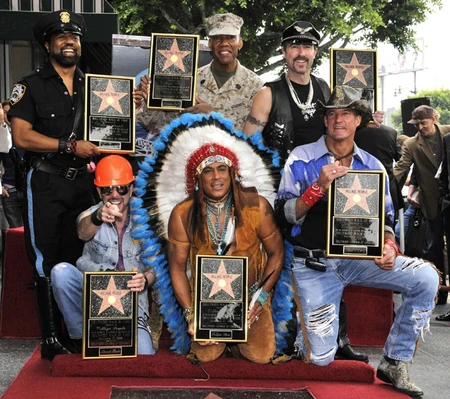
What is a village you may ask? Well, according to Wikipedia...
"A village is a human settlement or a residential community, larger than a hamlet but smaller than a town with a population typically ranging from a few hundred to a few thousand."
Sounds good enough for me!
My personal opinion is that villages will not have a major fast-food outlet or a large supermarket. They usually, but not always, have a church or chapel, a pub, and some independent shops. They will typically have less than ten thousand permanent residents.
On with the show...
Sunderland, Lancashire
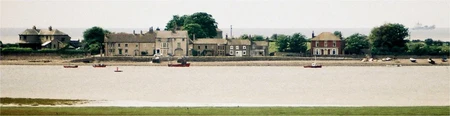
Not to be confused with it's much larger namesake almost a hundred miles to the north east, on the opposite coast, Sunderland is a small village that is unique in the United Kingdom. It is the only village that is on the mainland, but is cut off by the tide twice a day. The only access by road is on a tidal causeway that is buried by the sea at high water.
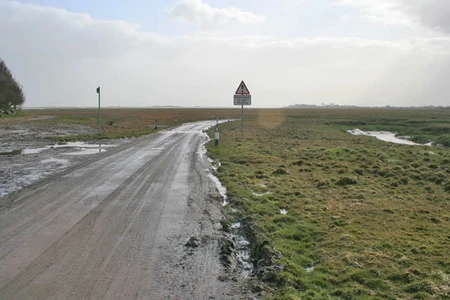
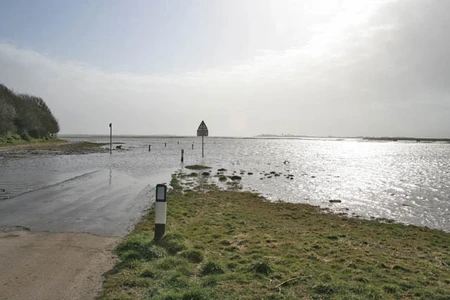
Today there are only a few homes at Sunderland, but at the start of the 18th century, it was a different matter. Sunderland was developed as a part of the port of Lancaster, at the time the fourth largest in the UK, after London, Bristol, and Liverpool. Larger ships couldn't always make it up river to the main port, and so Sunderland was born. There were warehousing facilities, pubs, and hotels, some of the buildings still remain today, although now converted into homes.
At the time, Lancaster, along with other ports in the UK and further afield were involved in the slave trade, a history that is brought to mind when you visit this village. In a field, just outside the main settlement, there is a grave that has been tended by locals since the 18th century. It is a grave that is known as Sambo's Grave. Nowadays the name is not politically correct, however, this is the grave of a young man that was taken ill whilst his ship was docked in the port. Sambo, according to local historians was his actual name rather than a racial slur.
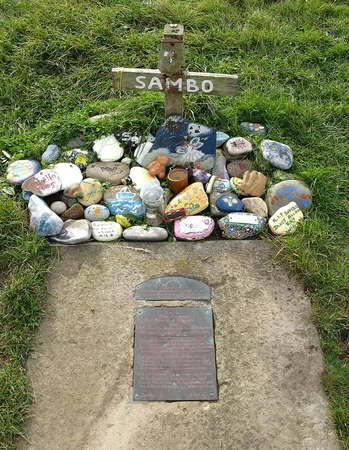
By the end of the 18th century, Sunderland was in decline, mainly due to the building of a new dock on the other side of the river at Glasson, a port that is still in use to this day.
Another feature in this small village is a artwork by environmental artist Chris Drury, the Horizon Line Chamber acts as a pinhole camera, and is one of many installations placed by the artist around the world.
The village has it's own website with a plethora of images from around the village and surrounding area.
The nearest large town to Sunderland is Lancaster.
Wrenbury, Cheshire
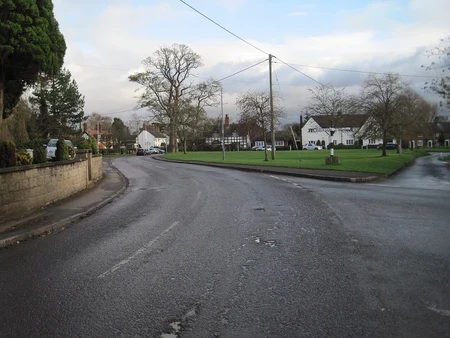
Wrenbury is mentioned in the Domesday Book, a record of a survey conducted for William the Conqueror in 1086, as Wareneberie, and became Wrennebury in 1230. The name has been shortened over the years but it's origins are thought to mean "old forest inhabited by wrens". Parts of the local church were constructed in the early 16th century, and it's oldest bell dates from 1610.
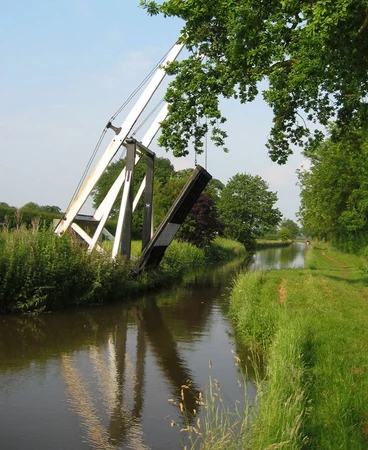
Along with several historic buildings in the village, there are three rare canal drawbridges. These were amongst Thomas Telford's early work and date to around 1790, one still carries road traffic and is part of the main road through the village.
Since 2000, the village has hosted an annual "Scarecrow Trail" where local residents build scarecrows of many different guises to create a guided walk around the village, asking visitors to vote on their favourite scarecrow scenario. All proceeds from the sale of visitor guides are given to local charities. There are usually around two hundred scarecrows on display at the event that is held in July each year.
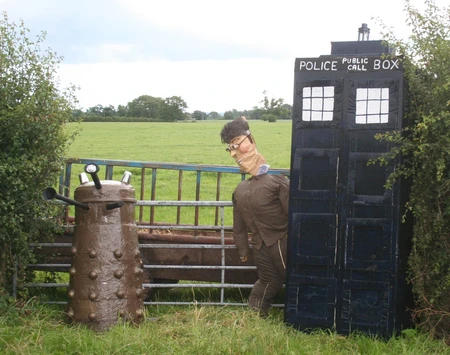
The village has it's own website designed and run by a local resident.
The nearest large town to Wrenbury is Nantwich.
Balsham, Cambridgeshire
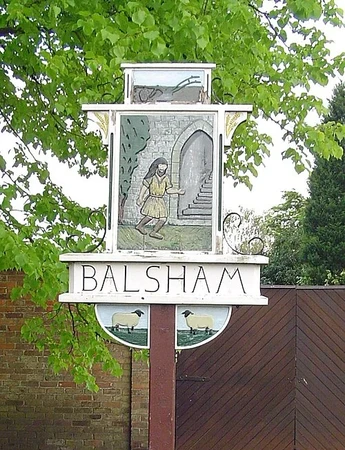
Over a thousand years ago, way back in 1015, the village was completely destroyed by Viking raiders. The above sign commemorates the sole survivor of this raid that hid in the parish church to escape.
Balsham is connected to the next village, West Wratting, by a road called Slough Hill Lane. This road is believed to be haunted by a creature known as the "Shug Monkey", that resembles a large shaggy black dog with the face of a monkey. It is thought to be similar to another creature from nearby East Anglia known as "Black Shuck". Both are thought to originate in Norse mythology, makes sense considering the Viking connection.
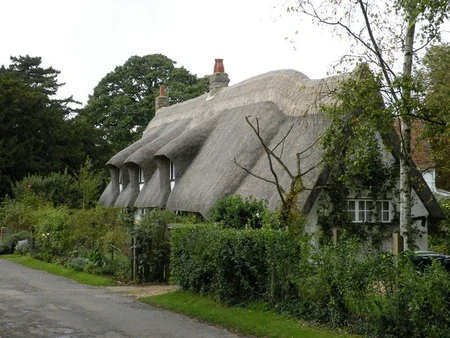
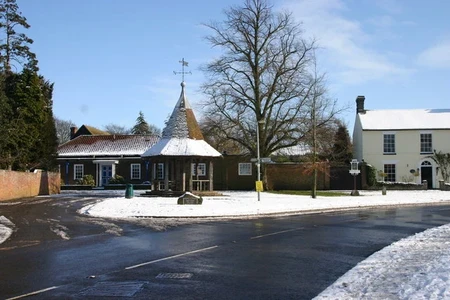
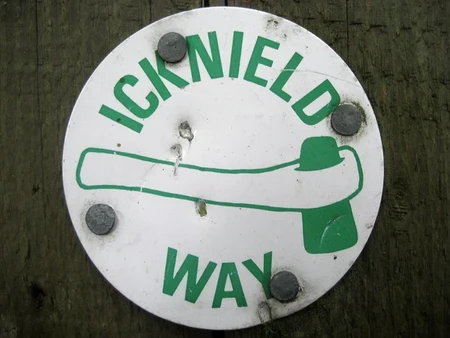
The 110 mile long Icknield Way path passes through the village on it's way from Buckinghamshire to Suffolk. The trail more or less follows a chalk ridge that crosses England. Along with a couple of other paths it traverses from coast to coast.
The village has its own website with a large gallery of photographs and information.
The nearest large town to Balsham is Cambridge.
Godshill, Isle of Wight
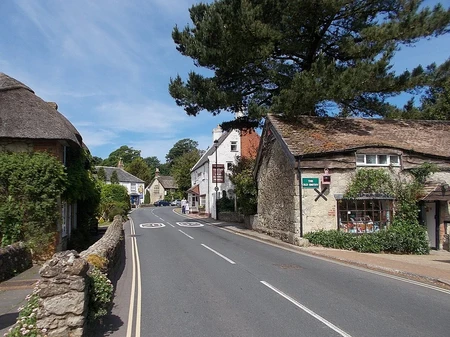
Godshill, meaning literally "The Hill of God", dates back to at least the 12th century, probably earlier. The god in the name is more than likely referring to a pagan god, even though the Christian church was built upon a small hill.
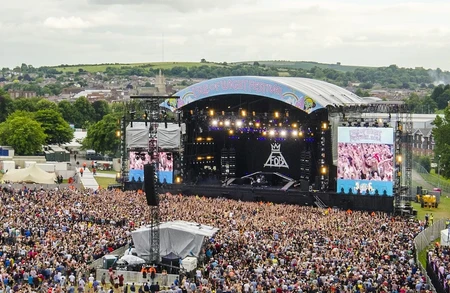
Nearby Ford Farm was the site of the first Isle of Wight Festival in 1968, an event that is held each year and attracts artists and spectators from around the world. Bob Dylan famously played there after his motorcycle crash when it was thought he wouldn't perform again. He left for England when many thought he would perform at Woodstock in the USA at the time. Other bands that have played there include Jimi Hendrix, The Who, and Green Day.
Also within the village there are two pubs, the Taverners, and the Griffin. The latter has a maze in the shape of a Griffin.
There is also a model village in Godshill, that is built on a scale of 1:10. It is also part of the Royal Horticultural Society that provided the bonsai style trees to maintain the scale. It is built with such an eye for detail, that the model village has a model village within it, this smaller model village has it's own model village. So it's a village within a village, within a village, within a village, got it? Great, because I'm confused and I'm writing this.
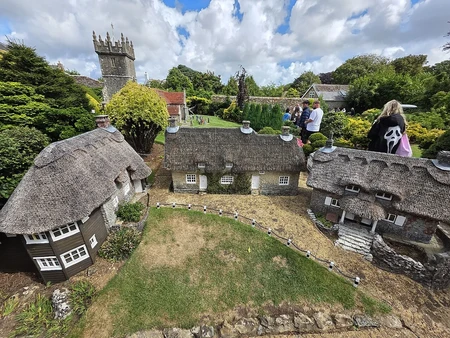
Both the village and its smaller counterpart have their own websites.
The nearest large town to Godshill is Shanklin, although you have to get onto the Isle of Wight from the mainland as well, usually via a ferry from Portsmouth, Southampton, or Lymington.
Princetown, Devon
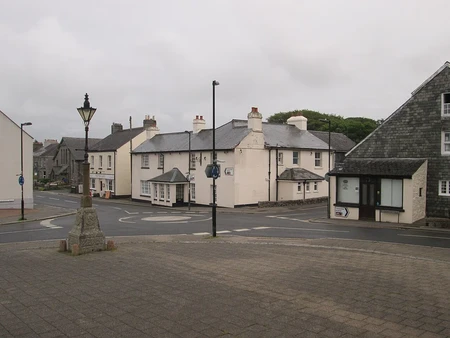
Princetown sits more or less in the middle of Dartmoor National Park, a region of bleak moorland in the south western county of Devon. The village was established in the 18th century and named after the then Prince of Wales.
The village is dominated by the nearby Dartmoor Prison, a behemoth of a building that can be seen for miles.
The prison opened in 1809 to house prisoners from the Napoleonic Wars that were originally held captive in Portsmouth. Within a few months of opening the jail was holding around 6,500 prisoners. It was built in the area to prevent escape, because even after leaving the building, escapees then had to cross around ten miles of bleak, windswept, and foggy moorland to reach relative safety. During World War I, the prison held conscientious objectors, although they had freedom of movement within the village.
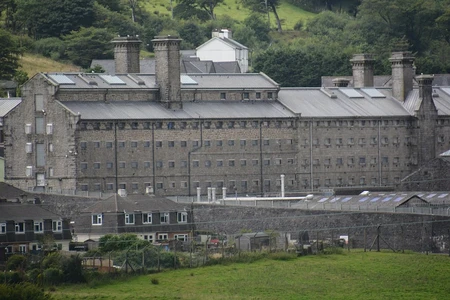
The prison is currently closed, due to evidence of radon contamination caused by the breakdown of uranium in the bedrock beneath Devon.
Every year, locals, and others, organise a charity event called "The Dartmoor Jailbreak". Participants are "released" from the prison and must attempt to travel as far as possible within four days, without paying for transport.
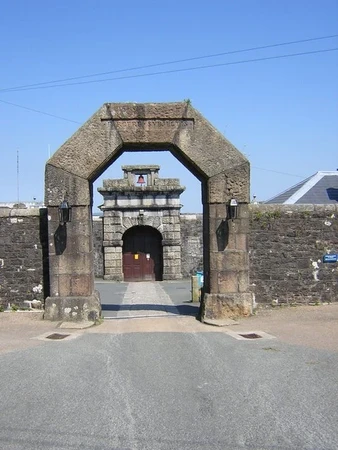
The Dartmoor Prison Museum has it's own website, the village sadly doesn't have a web presence, however Wikivoyage does have plenty of information for travellers to the area.
The nearest large town to Princetown is Tavistock, or just a little further away is Plymouth.
Summary
Well ?
What do you think ?
Should I carry on this series ?
I was thinking maybe do Wales, Scotland, and Northern Ireland first, and then if it goes OK, and I'm not getting bored, then carry on into mainland Europe. Or, do you think that's too much?
Is there anything you would like adding to each entry?
I did think of adding population figures, although they are constantly changing and may not be accurate anyway. Or directions to each village, but that depends on where you are starting from. Unlike the previous Islands series, where there is usually only one or two routes to access them, many villages have multiple roads in, the blog could get clogged up just with directions.
So, anyway, let me know what you think, and also how this series compares to my Islands series of blogs. Sorry, another shameless plug. I don't care anymore.
Thanks for reading and commenting (if you did), and I'll see y'all next time.