
Other Capital Origins ~ Part Four
First published: Saturday February 15th, 2025
Report this blog
- Introduction
- Rothera ~ British Antarctic Territory
- Dumont d'Urville Station ~ Adelie Land
- Scott Base ~ Ross Dependency
- Davis Station ~ Australian Antarctic Territory
- Villa Las Estrellas ~ Chilean Antarctic Territory
- San Juan Bautista ~ Juan Fernandez Islands
- Puerto Baquerizo Moreno ~ Galapagos Islands
- Hanga Roa ~ Easter Island
- Adamstown ~ Pitcairn Island
- Papeete ~ French Polynesia
- Summary
Introduction
Well, here we are at the fourth episode already, what a journey! I shall have to take time off work more often, it's much more relaxed sat a home in a nice warm room instead of dodging cars and busses on the nations highways. Unfortunately, if I didn't work I couldn't afford the nice warm room, so we have to make sacrifices. Anyway, enough chit-chat on with the show...
We left South Georgia and it's desolate shores and derelict whaling stations and headed south towards what was once known as Terra Australis until the discovery of Australia in 1606 by a Dutch explorer. Antarctica was first theorised by Aristotle in around 350BC, the theory being that there must be land to balance the Northern Hemisphere. The ice shelves of the continent were probablt first sighted in 1820 by a Russian exploration. The first confirmed landing was by a Norwegian team in 1895. Robert Scott and Ernest Shackleton were the first to reach the magnetic South Pole, and Roald Amundsen was the first to reach the geographic South Pole. The name for the continent derives from the Latin Antarcticus meaning "opposite to the north".
Let's Go...
Rothera ~ British Antarctic Territory
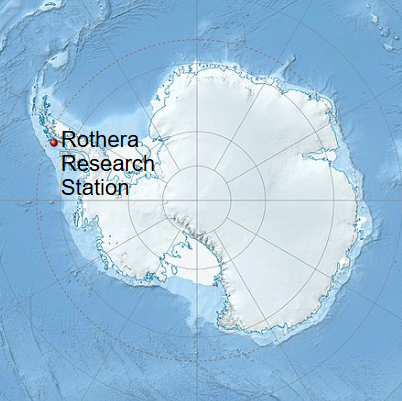
The British Antarctic Territory, or BAT for short, is an Overseas Territory of the United Kingdom. The area covered by the territory was originally administered under the Falkland Islands Dependencies, this included South Georgia we mentioned in the last blog as well as other smaller islands. Over 99% of the territory's land mass is covered by a permanent ice sheet. Like almost all of the territories that make up Antarctica, the BAT is disputed, although due to the Antarctic Treaty System, the disputes rarely amount to any violence. There are Argentinian and Chilean research bases within the area of the BAT. In 2012, the southern part of the territory was renamed Queen Elizabeth Land in honour of her Diamond JubiIee. I don't think there is much point discussing the etymology of the name, British Antarctic Territory.
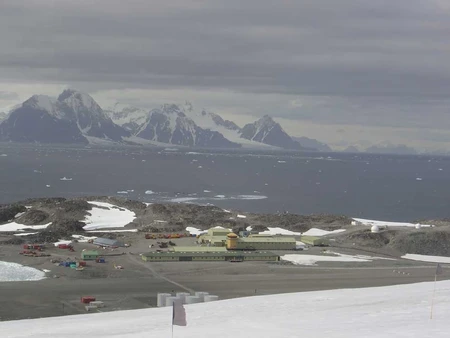
Rothera on the other hand, should be discussed. The research station owned by the UK government is classed as the capital of the territory. There are staff on the base all year round, although there are more in the summer than winter. The base was named after Rothera Point, a headland in the territory, which in turn was named after the Falkland Islands Dependencies surveyor, John M Rothera.
ROTHERA = NAMED AFTER JOHN M ROTHERA (A SURVEYOR)
Dumont d'Urville Station ~ Adelie Land
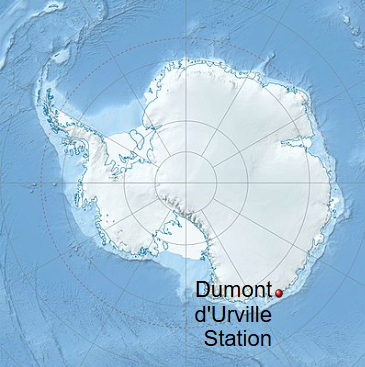
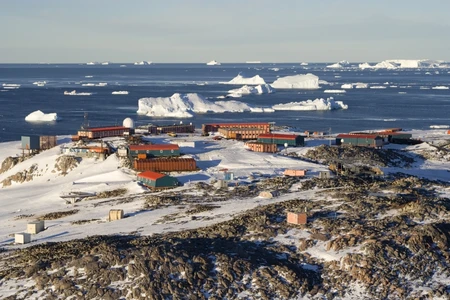
Adelie Land is administered as part of the French Southern and Antarctic Lands, an overseas territory of France, that encompasses several uninhabited islands between Antarctica and the Indian Ocean. Almost all of the land is covered in glaciers and affected by strong winds. A 1915 Scienc e Magazine article named it the "stormiest spot on the face of earth". The name of Adelie Land is connected to the name of the research station. It was named by a French explorer in honour of his wife, Adele.
The research station that is classed as the territory's capital is manned all year round, although primarily a scientific research facility it is increasingly used as a base for transportation to the Concordia Base, a French and Italian joint endeavour, almost 1100km inland. The base gets it's name from the aforementioned explorer, Jules Dumont d'Urville. It was his wife, Adele, we heard about earlier. The Academy Award winning documentary, March of the Penguins, was filmed in the area around the station.
DUMONT D'URVILLE STATION = NAMED AFTER A FRENCH EXPLORER
Scott Base ~ Ross Dependency
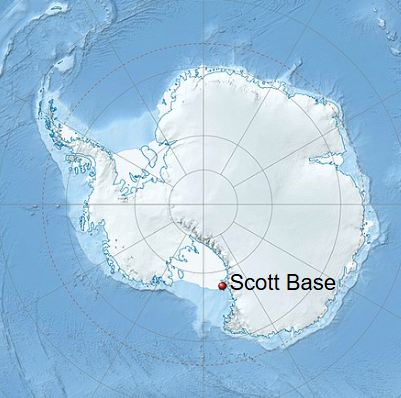
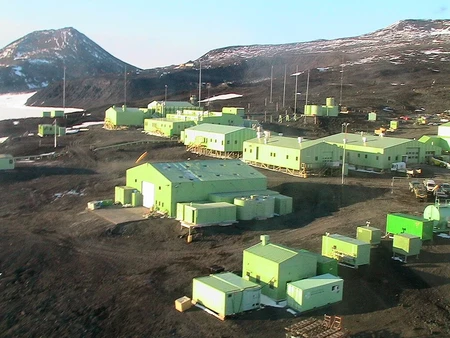
The Ross dependency is a claim to an area of Antarctica made by New Zealand. The claim is only recognised by the UK, Australia, France and Norway, although due to the Antarctic Treaty, all claims are held in abeyance whilst the treaty is in force. The area is named after Sir James Clark Ross, a British explorer that took possession of the territory on behalf of Britain. The British government then passed the land onto New Zealand in 1923.
The base was originally set up to support the Commonwealth Trans-Antarctic Expedition, a 1955 expedition led by Sir Edmund Hillary just a couple of years after he conquered Mount Everest. It was the first overland crossing of the continent, a second only occurred in 1981 led by Sir Ranulph Fiennes. Scott Base takes it's name from another British explorer, Captain Robert Falcon Scott, who perished in a race to the South Pole, being beaten by only five weeks by Roald Amundsen.
SCOTT BASE = NAMED AFTER ROBERT FALCON SCOTT
Davis Station ~ Australian Antarctic Territory
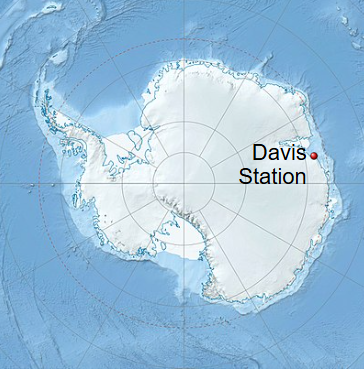
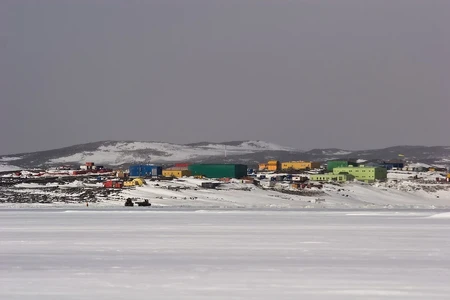
The Australian Antarctic Territory is an external territory of Australia, but I bet you'd already worked that out, you clever lot! Australia has the largest territory in Antarctica. There are research station in the area manned by scientists from Russia, China, India and even Romania. Like BAT I don't think there is much point discussing the origin of the AAT.
Davis Station is one of three Australian stations, the other two being Mawson and Casey. Davis Station is built in an Antarctic oasis, the immediate area is relatively ice free. The base was named after John King Davis, an English-born Australian explorer known for setting up meteorological stations in Antarctica. Incidentally, Mawson Station is named after another explorer, Sir Douglas Mawson, and Casey Station was named after Richard Baron Casey, an Australian statesman.
DAVIS STATION = NAMED AFTER JOHN KING DAVIS (ANOTHER EXPLORER)
Villa Las Estrellas ~ Chilean Antarctic Territory
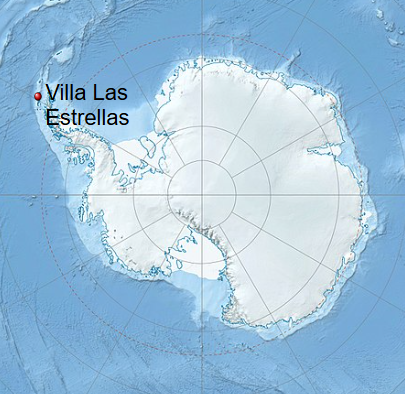
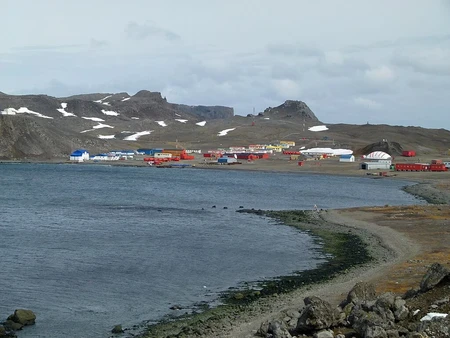
It can be argued that Villa Las Estrellas is the larger of only two civilian settlements in Antarctica, although it is situated within the Presidente Eduardo Frei Montalva research base in the Chilean Antarctic Territory. The other is situated in the Argentinian Esperanza Base. Again, it's not worth trying to find the origins of the CAT, but the main base mentioned above is named after the 27th President of Chile, Eduardo Frei Montalva.
The commune of Villa Las Estrellas consists of fourteen homes, a school, post office, library and hospital. There is a weather dependant air service from Punta Arenas that brings mail and supplies for many of the Chilean bases in Antarctica. There is also a small hostel for visitors that can accomodate up to twenty people. The name is Spanish and means "Hamlet of the Stars"
VILLA LAS ESTRELLAS = HAMLET OF THE STARS
San Juan Bautista ~ Juan Fernandez Islands
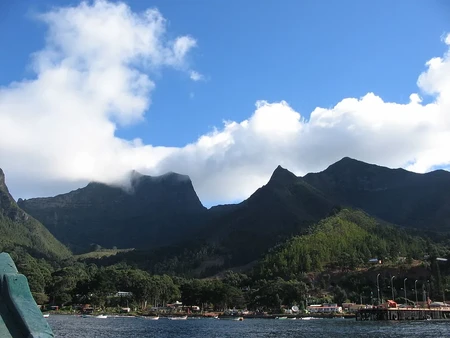
Moving away from Antarctica, the only two remaining claims are from Argentina (administered from Ushuaia) and Norway (administered from Oslo) so we head north again.
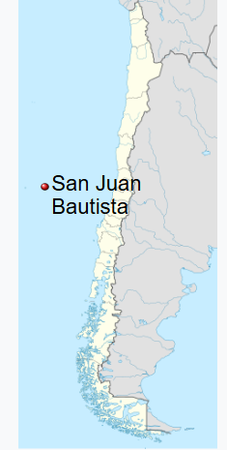
Situated 670km (416 miles) of the Pacific coast of Chile are the Juan Fernandez Islands. they are technically part of the Valparaiso region of Chile, but, according to Wikipedia, they have a capital, so here we are. The islands are mostly known as the place where Alexander Selkirk was marooned for over four years. He was a Scottish privateer and sailor and is thought to have been the inspiration for Daniel Defoe's Robinson Crusoe. In fact, two of the islands in the group are called Robinson Crusoe and Alexander Selkirk Islands. The islands are named after Juan Fernandez, the explorer who discovered them in the 1570s.
San Juan Bautista is situated on Robinson Crusoe Island. Some sources state that the town was founded in 1877, although others declare it earlier in 1750. There is written evidence from whaling ship's logs that state settlers and their possessions were landed on the island in 1844. San Juan Bautista is Spanish for "Saint John the Baptist"
SAN JUAN BAUTISTA = SAINT JOHN THE BAPTIST
Puerto Baquerizo Moreno ~ Galapagos Islands
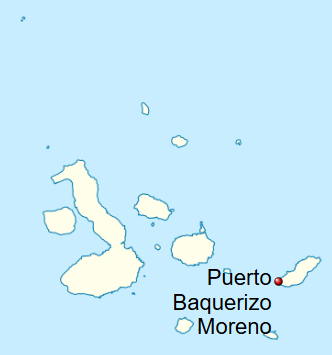
The Galapagos Islands are a region of Ecuador that are famous as the place where Charles Darwin was inspired to write the "Origin of Species" during his voyage on the HMS Beagle. The islands had been a hideout for pirates during the 17th century, who used it as a base to plunder shipping off the coast of South America. The islands were called "The Enchanted Isles" by early sailors, although a map drawn in 1570 has them marked as Insulae de los Galopegos a Spanish/Latin hybrid meaning "Islands of the Turtles". The Spanish word galapago derives from the pre Roman Iberian word for "turtle"
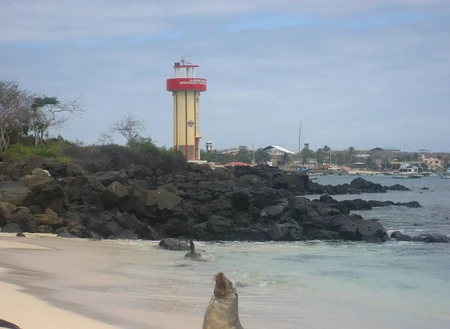
Puerto Baquerizo Moreno is the main town and capital of the Galapagos, and is situated on the easternmost island of the group, San Cristobel. There is a small beach in the town that is exclusively reserved for sea lions, and they have taken to lounging on the decks of the anchored boats and have even taken over nearby park benches. The town takes it's name from the first president of Ecuador to visit the islands, Alfredo Baquerizo Moreno, who arrived during his presidency in 1916.
PUERTO BAQUERIZO MORENO = PORT OF BAQUERIZO MORENO (PRESIDENT OF ECUADOR)
Hanga Roa ~ Easter Island
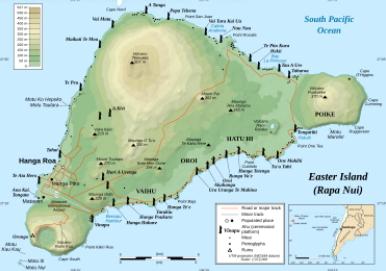
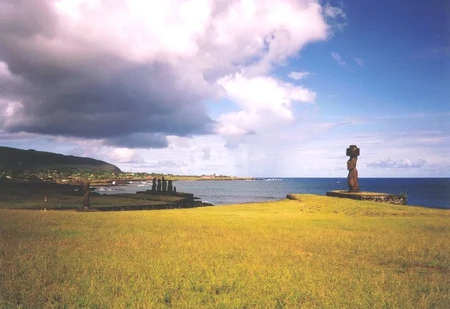
Easter Island is a part of Chile, in Spanish it is called Isla de Pascua and in the local Polynesian language it is known as Rapa Nui. The island is famous for its Moai, the statues that are all around the island. The statues are thought to have the faces of deified ancestors of the Rapa Nui people that once lived there. They are thought to have been constructed between 1250 and 1500. The largest is over ten metres high and weighs around 80 tons. The name Rapa Nui means "Big Rapa" to distinguish it from Rapa Iti or "Small Rapa", an Island in French Polynesia. The meaning of Rapa is unknown. The Easter island name comes from the first European visitor, Dutch explorer Jacob Roggeveen, who encountered the island on Easter Sunday in 1722. Isla de Pascua is just Spanish for "Easter Island"
Hanga Roa is the largest settlement on Easter Island. When Chile first claimed the island in 1888, all of the Polynesian residents were forced into the town of Hanga Roa and the rest of the island was leased to the Williamson-Balfour company that ran the rest of the island as a sheep farm. The indigenous people were banned from the area. The company was a Scottish owned Chilean company with interests in shipping, wool, and various other commodities. In 1953, the Chilean Navy took over the island and in 1966 all the residents gained Chilean citizenship. Hanga Roa is from the Polynesian language and translates as "Long Bay"
HANGA ROA = LONG BAY
Adamstown ~ Pitcairn Island
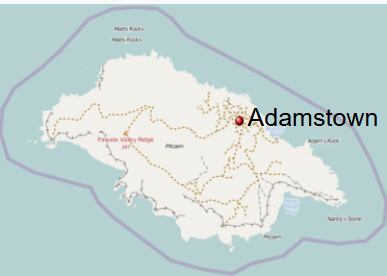
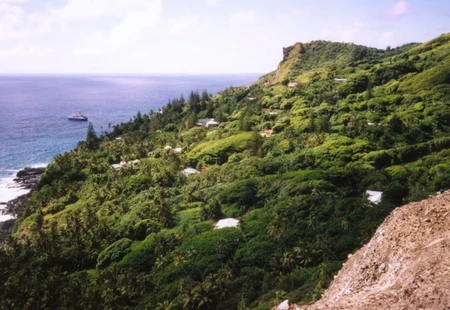
The Pitcairn Islands, or to give it it's official title, "Pitcairn, Henderson, Ducie and Oeno Islands" are the only British Overseas Territory in the Pacific Ocean. The Pitcairn Islanders are mainly descendants of the nine mutineers and Tahitian men and women that landed on Pitcairn following the mutiny onboard the HMS Bounty in 1790. Pitcairn Island was named after the man who first sighted it, Robert Pitcairn, a 15 year old midshipman onboard HMS Swallow. The other islands in the group are called Henderson Island (Captain Henderson of the Hercules), Ducie Island (Francis Reynolds-Moreton, 3rd Baron Ducie), and Oeno Island (named after a whaling ship Oeno).
Adamstown is the largest and only settlement on Pitcairn, or in fact any of the islands in the group, all the residents live in and around it. In 2023, the population was 35. The rest of the island is set aside for agriculture. The town as access to satellite internet and TV, however, the main form of communication is still "amateur radio". The town is named after the last surviving mutineer from the aforementioned HMS Bounty, John Adams
ADAMSTOWN = NAMED AFTER MUTINEER JOHN ADAMS
Papeete ~ French Polynesia
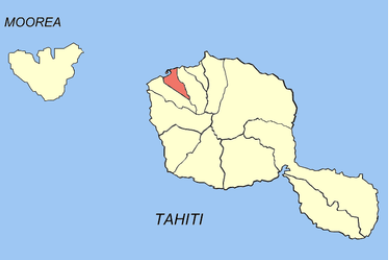
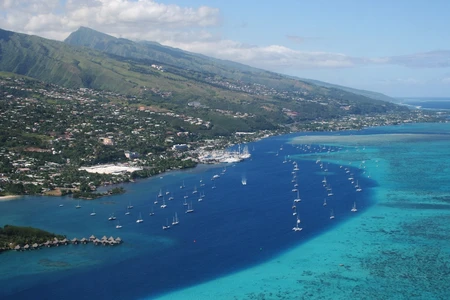
French Polynesia is an overseas collectivity of France that encompasses 121 islands in the region, stretching over 2000 km and having a population of around a quarter of a million people. Polynesia derives from Greek meaning "many islands" and was first coined in 1756 by French writer Charles de Brosses, who used it to describe all the islands of the Pacific. Obviously French Polynesia refers to the French part of the Pacific that includes Tahiti and the surrounding islands. The origin of the name of Tahiti is lost in history, but is thought to refer to some aspect of the island.
The population of the town of Papeete was increased significantly when the French government decided to move their nuclear testing facilities from Algeria to several atolls 1500km to the east of Tahiti. In 1987 and 1995, the testing resulted in riots in the town against the government, causing a significant fall in tourism. Papeete, which is actually written Papeʻetē translates to "water from a basket".
PAPEETE = WATER FROM A BASKET
Summary
There you have the fourth episode, I would say we are probably half way around our world tour, possibly, maybe, I don't really know if I'm honest. I keep finding more places, that I had forgotten about. Still, learning is a pleasure and every day is a school day, as my grandad Charlie used to say. Although to be fair, he did say an awful lot of stupid things, along with knowing the official Latin names of every single plant in his extensive, and beautiful, garden. I miss my Grandad Charlie, he was an inspiration. He died almost40 years ago now, RIP Charles!
Anyway enough of my morose talk, where to next? Well we will carry on around the South Pacific for a while before scooting around the north of Oz, and into the eastern edge of the Indian Ocean.
So for now I leave you with a quote from Thor Heyerdahl, a Norwegian adventurer who travelled across the Pacific Ocean in a boat made of mainly balsa wood, just to prove that the Polynesians had the knowledge to make such a trip. It was called the Kon-Tiki expedition, you may have heard of it, if not look it up, it's worth a read.
“Pearls rarely turn up in oysters served to you on a plate; you have to dive for them.”
This has to be the most unoriginal batch of names in the entire series—nearly all of them are just named for people. My guess is that they were too busy doing research or whatever to spend much time on the name. Villa Las Estrellas has a kickass etymology, though.
And...Good Luck, I fear you may need it.