
Other Capital Origins ~ Part Three
Last updated: Saturday February 15th, 2025
Report this blog
Introduction
I'm a bit better today, thanks for asking. I was a little under the weather when I wrote the last part of this blog series, but the bug seems to be passing now, thanks to a concoction of over the counter medications and lots of beverages of the non-alcoholic kind. I rarely partake of alcohol nowadays, just the odd glass of wine occasionally, the last one I had was Christmas and it's now mid-February.
But enough about me and my woes, you want to hear about the origins of city names don't you? Well, I hope you do, otherwise you wouldn't be hear, unless you walked in by mistake and are now stuck while some suited guy tries to sell you a timeshare apartment in Ibiza. But I digress, as usual.
Where were we? Oh yeah, the Caribbean! Working our way around the West Indies as they are collectively known. So, without further ado, here's our first Port of Call...
Oranjestad ~ Sint Eustatius
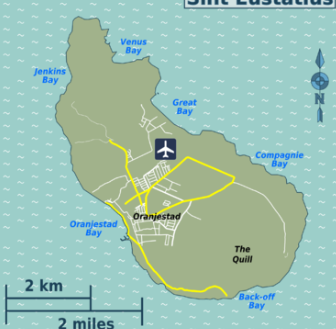
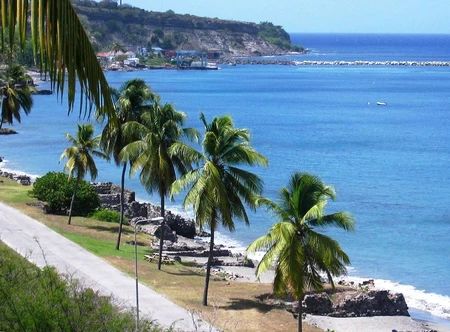
As you probably gathered from the spelling of saint in the island's name, Sint Eustatius is a Dutch island. It was originally named Nieuw Zeeland by the settlers from Zeeland in the Netherlands. Now that would have got confusing if they hadn't renamed it shortly afterwards in honour of Saint Eustace who was a martyr during the Roman era. Incidentally, the indigenous Arawak name for the island is Aloi meaning "cashew island", possibly due to it's shape.
Oranjestad is the capital of the island territory, not to be confused with Oranjestad in Aruba, more about that one later. Right in the centre of the town is Fort Oranje, a restored 17th century fort with cannons, nearby are the ruins of one of the oldest known synagogues in the Western Hemisphere. Oranjestad is Dutch for Orange Town and is named after the Prince of Orange. The current Royal household in the Netherlands is the House of Orange-Nassau.
ORANJESTAD = ORANGE TOWN
Brades ~ Montserrat
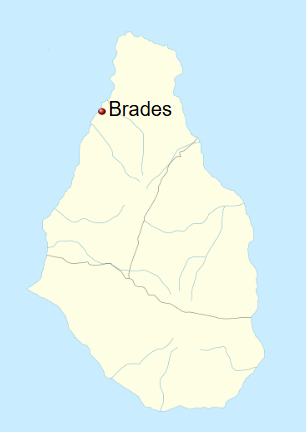
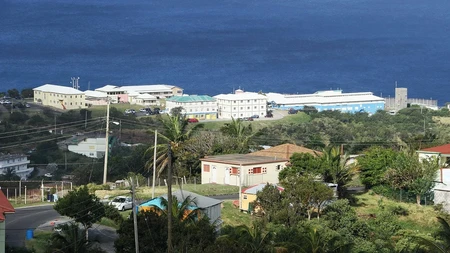
Montserrat is an Overseas territory of the United Kingdom that was devastated in 1995 by the eruption of the Soufriere Hills volcano. The southern part of the island is still uninhabitable thirty years later. Montserrat is nicknamed the "Emerald Isle of the Caribbean" due to the ancestry of many of the inhabitants and the resemblance of it's coastal areas to the coast of Ireland. Christopher Columbus, yup him again, named the island Santa María de Montserrate in 1493 after the Virgin of Montserrat monastery near Barcelona in Spain. Montserrat is Catalan for "serrated mountain".
Montserrat is in a transition period, a long one granted, but a transition none the less. The old capital Plymouth (named after Plymouth in the UK) was destroyed and covered in ash during the volcanic eruption. Brades is a temporary capital whilst a new one is being built at Little Bay (named because its next to a little bay!) The only things I can find on the origin of Brades is that it is sometimes called Brades Estate, so possibly it derives from a name. Or that it derives from the Old English word brǣdu meaning "broad valley". Another origin is that it may come from another Old English word meaning "bread". I'm thinking it is either a name or the valley one?
BRADES = MAYBE BROAD VALLEY OR A NAME
Basse-Terre ~ Guadeloupe
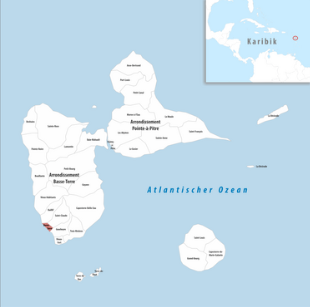
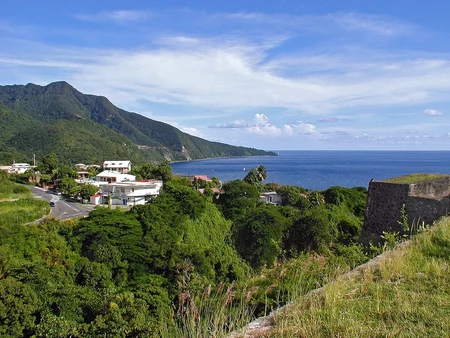
Guadeloupe is an overseas department of France. This means it is a part of France, it's citizens are French, as are their laws and regulations, the currency is the Euro, and it is part of the European Union. There are four other overseas departments that we shall discuss later. For now though, Guadeloupe is another of Christopher's "discoveries", although the native people, the Arawak, were there before him. They called the island Karukera or "The Island of Beautiful Waters", our mate CC decided to name it after another shrine to the Virgin Mary in Guadalupe, Spain, Santa María de Guadalupe. When the French took over they kept the name but gave it a French spelling.
To avoid confusion with the capital of St. Kitts and Nevis, Basseterre, the French added a hyphen to the name. I don't know if that is true, I made that bit up. Basse-Terre though does mean the same thing. It is French for Low Land
BASSE-TERRE = LOW LAND
Fort-de-France ~ Martinique
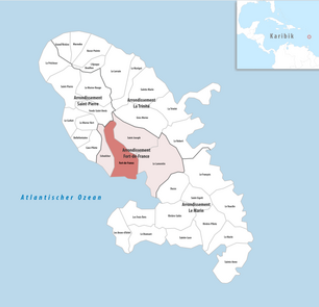
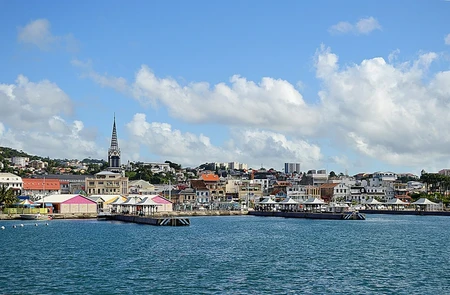
Martinique is the second of our French Overseas departments, meaning that like Guadeloupe it's citizens are French and are part of the EU, with all the rights that brings. Our old mate Chris visited the island in 1502, and the indigenous people called the island Matinino meaning "Island of Women". However other natives called the island Madiana/Madinina, meaning ''island of flowers''. It is thought that Martinique is a corruption of those two names.
Fort-de-France (notice the French love of the hyphen again) was originally called Fort-Royal, but during the French Revolution the name was changed to Fort de la Republique. It changed to Fort-de-France sometime in the 19th century. Even today Fort Royal is still used in a shortened version in the Creole language for the town as Foyal. The name obviously translates from French to Fort of France.
FORT-DE-FRANCE = FORT OF FRANCE
Kralendijk ~ Bonaire
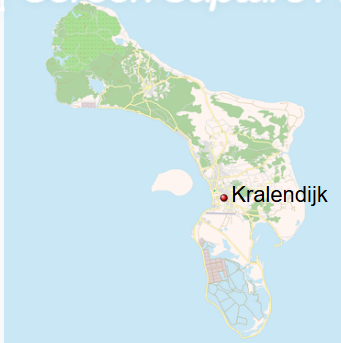
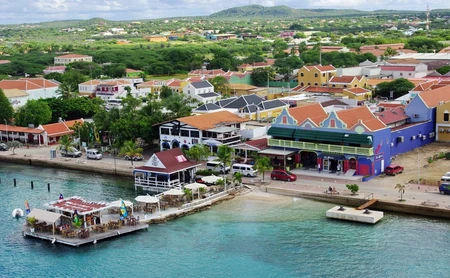
Bonaire is part of the ABC Islands along with Aruba and Curacao, all three are part of the Netherlands and as such it's citizens are Dutch nationals. The name Bonaire is thought to derive from an extinct language called Caquetio that was spoken by Arawak natives of Venezuela. The word Bonay meaning "low country" is thought to be the original. The early Dutch and Spanish settlers changed the name to Bojnaj and Bonaire. Although there is some French history on the island, it isn't thought to be enough to influence the name, even though it appears to be French for "Good Air"
The residents of Kralendijk speak a Portuguese Creole dialect as well as Dutch and English. In this dialect, called Papiamentu, the town is often called Playa or "beach". The official name of Kralendijk is a corruption of the Dutch word Koralendijk, which means "coral dyke."
KRALENDIJK = CORAL DYKE
Willemstad ~ Curacao
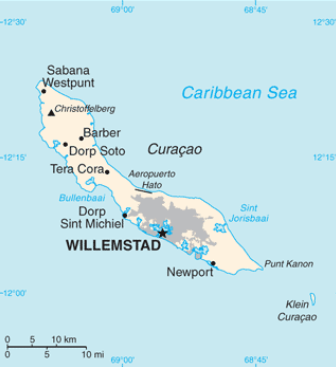
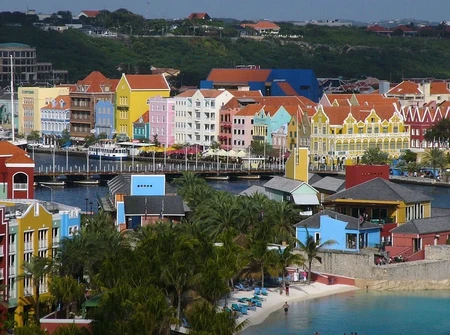
Curacao is another Dutch possession that is part of the aforementioned ABC Islands. There are two theories about how the island of Curacao got it's name. It is thought to have been the name that the indigenous natives called themselves, Indios Curaçaos. Another theory that persists but in uncollaborated is that early sailors suffering from scurvy due to a lack of vitamin C were left on the island to recuperate due to the large number of fruit trees. The Spanish and Portuguese sailors referred to the island as Isla de la Curación and Ilha da Curação respectively, both meaning "Island of Healing"
The islands capital, Willemstad, was originally a walled city called Punda that played a large part in the slave industry. Over the years the city was enlarged by neighbourhoods that eventually all grew together to form Willemstad. The new town was named Willemstad after King William I of the Netherlands and Luxembourg. Willem- is the Dutch version of William and -stad means town.
WILLEMSTAD = WILLIAM TOWN
Oranjestad ~ Aruba
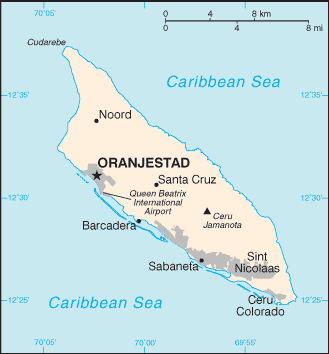
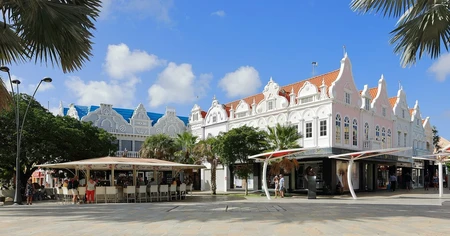
Aruba is the third island of the ABC Islands of the Netherlands. The extinct language of Caquetio is thought to be the origin of Aruba. In that language it was called Oruba meaning "well situated island", however there are other theories. Oibubia which means "Guided island", or from the indigenous Carib peoples, Ora Oubao (Shell island) and Oirubae which means "Companion of Curaçao". There is a common misconception that Aruba derives from the Spanish Oro hubo meaning "there was gold once" but the Spanish themselves declared the islands as useless and devoid of minerals. Gold was discovered but not until 1824 causing a small gold rush.
As we found out with Oranjestad in Sint Eustatius, another Dutch island, earlier the town name translates to Orange Town and is named after the Prince of Orange. It must be a little confusing back in the Netherlands when someone says they're heading to Oranjestad !
ORANJESTAD = ORANGE TOWN
Cayenne ~ French Guiana
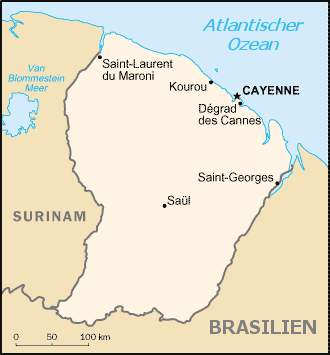
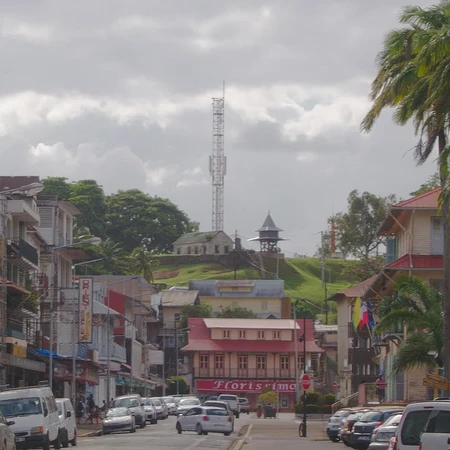
French Guiana is another of those five parts of France we spoke of earlier, Martinique and Guadeloupe. The other two remaining departments will be covered in later editions of this blog. (They are both in the Indian Ocean). As with the others, the currency is the Euro and it's citizens are fully entitled to live anywhere within the EU. According to the Oxford English Dictionary, Guyana or Guiana as the French spell it means "land of many waters". There were five different Guyanas, Spanish (now part of Venezuela), British (now Guyana), Dutch (now Suriname), French (French Guiana) and Portuguese (now Amapa state of Brazil).
Cayenne was thought to have been named after either the Cayenne River that runs through the city or the Cayenne pepper. It may be that the river was also named after the pepper. everything seems to go back to the pepper. The word "cayenne" comes from the Tupi word kyynha, which means "capsicum" or "hot pepper".
CAYENNE = HOT PEPPER
Stanley ~ Falkland Islands
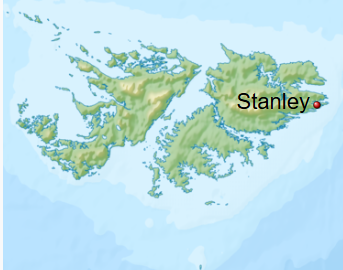
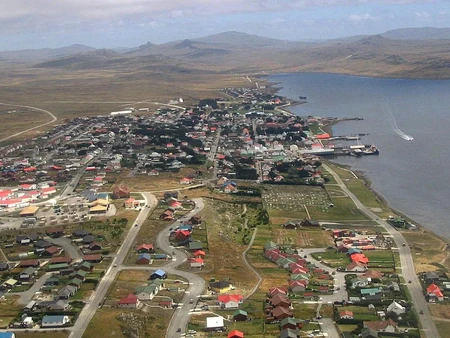
The Falkland Islands are an overseas territory of the United Kingdom, although this is disputed by Argentina. The island population voted in a referendum in 2013 with the outcome being 99.8% voted to remain a British territory, with only three votes against. The turnout of voters was 92%. The islands take their name from the Falkland Sound which is the channel between the two main islands. This was named in 1690 by the British captain that first landed on the islands, John Strong. He named it after Anthony Cary, the 5th Viscount Falkland, the treasurer of the navy that financed the exploration. Falkland is a small village in Scotland that derives it's name from Folk Land meaning land owned by common folk.
The original capital of the Falklands was Port Louis to the north of Stanley, however an early expedition was organised to find a more suitable anchorage and place for a port. The area that is now Stanley was called Port Jackson and was a much deeper bay. It was renamed Port Stanley in 1845 in honour of Lord Stanley, who was the Secretary of State for War and the Colonies at the time. During the Argentine occupation in 1982, the town was renamed Puerto Argentino.
STANLEY = NAMED AFTER LORD STANLEY
King Edward Point ~ South Georgia
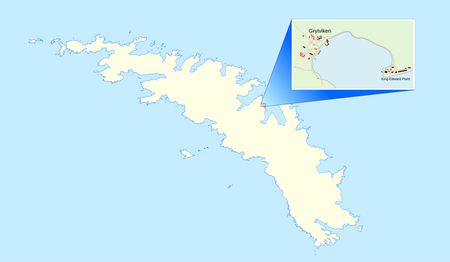
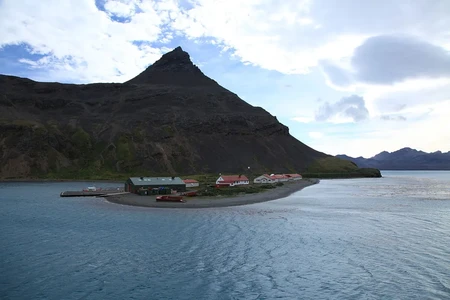
South Georgia is a British Overseas Territory that also encompasses the South Sandwich Islands. All are uninhabited except for South Georgia that has a non-permanent population of scientists. The island was first discovered in 1675, but it wasn't until a hundred years later in 1775 that James Cook landed and claimed it as a British possession calling it the "Isle of Georgia" after King George III. South Georgia became one of the world's largest whaling stations until stocks in the surrounding waters were so low it became unprofitable. It closed in 1964.
Incidentally, thanks to Xtrordinary for pointing out in the comments that I glossed over the South Sandwich Islands that are part of this Overseas Territory. After leaving South Georgia, Cook sailed south and discovered a group of islands that he named "Sandwich Land" in honour of Lord Sandwich, who was then the First Lord of the Admiralty. They were subsequently renamed the South Sandwich Islands to distinguish them from the other set of Sandwich Islands further north. These are now known as Hawai'i
The capital (if you can call it that) is King Edward Point and it is on the other side of the bay from the largest of several whaling stations, Grytviken, meaning "Pot Bay", named by a Swedish explorer after the many whaling pots he found there. Grytviken is the final resting place of Sir Ernest Shackleton. King Edward Point was named after King Edward VII of the United Kingdom.
KING EDWARD POINT = NAMED AFTER KING EDWARD VII
Summary
Not all of the Antarctic territories can be written about. Some are administered from their respective parent countries, but there are some that, according to Wikipedia anyway, have a settlement that is classed as a capital. There are a multitude of uninhabited islands dotted around the Southern Ocean that are outposts of various countries, Bouvet Island for example is the most remote and is owned by Norway on the opposite side of the globe. It is inhospitable place with landing only accessible in very good weather.
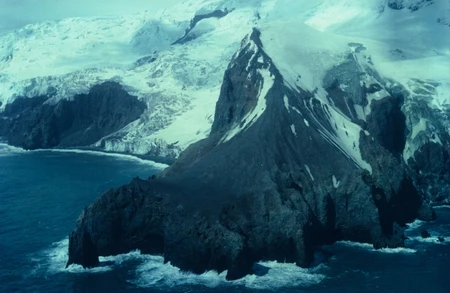
Anyway, enough about Bouvet Island, that might be a topic for later blogs. Uninhabited Islands. I like that idea. I'll have a think, let me know if you would be interested in a blog series about that!
Enough for now, I shall leave you with the words of an ad that Sir Ernest Shackleton supposedly posted in a London newspaper...
“Men Wanted: For hazardous journey. Small wages, bitter cold, long months of complete darkness, constant danger, safe return doubtful. Honour and recognition in case of success.”
It is said that he had replies from at least five thousand men and three "sporty girls".
Maybe it's just me but these names seem a little… uncreative. I wonder if, since they aren't important national capitals, their names were given less thought?