
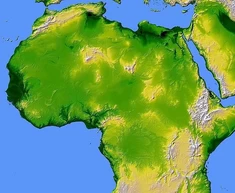
Second City Origins ~ Africa Part 1
First published: Tuesday September 17th, 2024
Report this blog
Introduction
They say that first impressions are an indication of things to come. Well, my initial research into the second cities of Africa is giving me an inkling that I may have some hard work in the near future.
I conduct my research in a certain way that works for me. Firstly, I make a list of the countries, then check each on citypopulation.de, for the largest city that is not the capital. Then I make a preliminary check on Wikipedia for each city to check for the etymology of the city name. I then put a checkmark on my pad next to the placename if there is a suitable explanation of the name. Unfortunately, at the first check, there are only four out of the fourteen settlements with a decent explanation. This means that I have a lot more research to perform, sometimes from not very reliable sources, and sometimes there is no information out there.
If I remember correctly, when I wrote the "Capital City Origins" blog, there were a couple of cities that I couldn't find the information. I even resorted to e-mailing the local government in those cities, to no avail. These particular entries will remain a mystery, at least for now.
Anyway, enough of my third-world problems, I shall do my best to bring these city origins to you.
Here we go with our first entry.....
Alexandria ~ Egypt
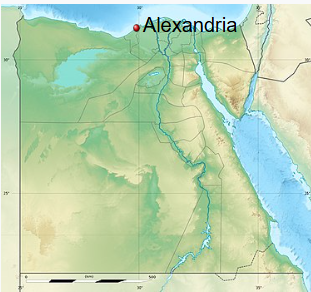
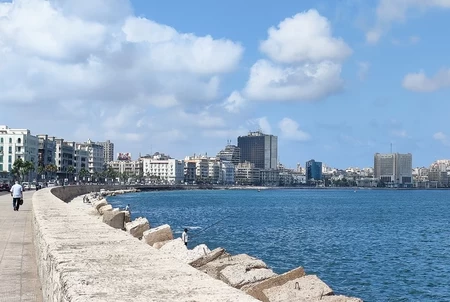
Alexandria's position on the north coast of Egypt has earned it the nickname of "Bride of the Mediterranean". It is also known as simply "Alex" as referenced in the 1958 film, Ice Cold In Alex, in which soldiers during the North Africa Campaign make a journey across the Sahara desert to get an ice cold beer in Alexandria.
As you probably guessed, Alexandria is named after Alexander the Great, he actually founded the city in around 331BC.
ALEXANDRIA = NAMED AFTER ALEXANDER THE GREAT
Benghazi ~ Libya
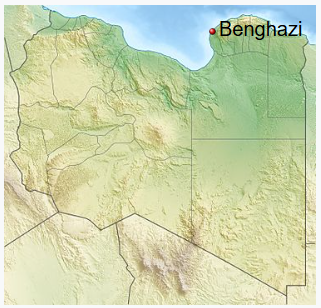
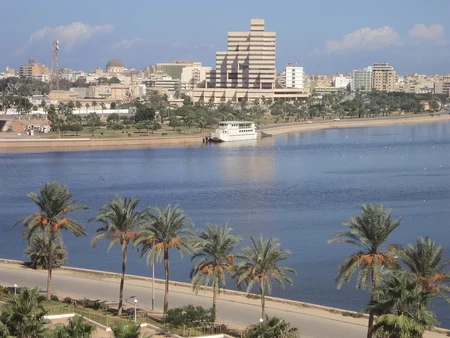
The area of Benghazi has been settled since around 500BC, firstly by the Greeks and Romans, then following the Byzantine and Ottoman eras, by the Italians who developed the city. After World War II, Benghazi became the capital of the newly independent Kingdom of Libya, however, it lost its capital status during the 1969 coup d'etat by Muammar Gaddafi.
After several names, the city became known as Marsa ibn Ghazi on 16th century maps. It became known as Benghazi during the Italian occupation in the early 20th century.
The only etymology I can find is that Benghazi means "Son of Ghazi", No idea if that is right, of who Ghazi was, but it will have to do for now.
BENGHAZI = SON OF GHAZI
Sfax ~ Tunisia
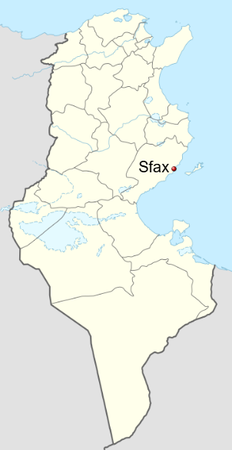
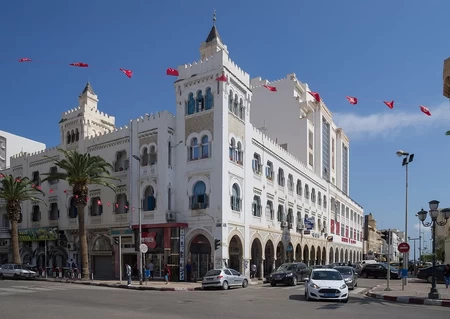
Sfax was founded in 849 on the ruins of the former Berber city of Taparura, a name that was recently revived for a suburb of Sfax.
The name Taparura originates from the Greek name, Taphroúria (Ταφρούρια) which means "fortified place". This Greek meaning was translated during the Byzantine era into the Berber language as S-Fa-Ekez from which we derive Sfax.
SFAX = FORTIFIED PLACE
Oran ~ Algeria
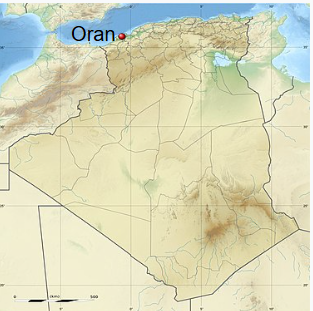
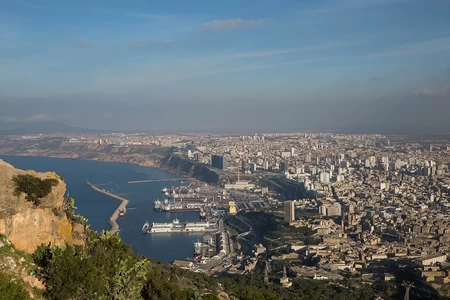
Although there has been a small settlement on the site since Roman times, the present-day city of Oran was founded in 903 by the Berbers.
Oran is an anglisized version of the Arabic name Wahran which itself comes from the Berber expression wa - iharan which translates to "place of lions". The last two Barbary Lions in Algeria were killed on a nearby mountain.
ORAN = PLACE OF LIONS
Casablanca ~ Morocco
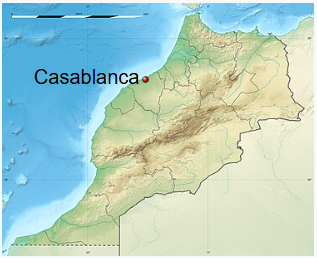
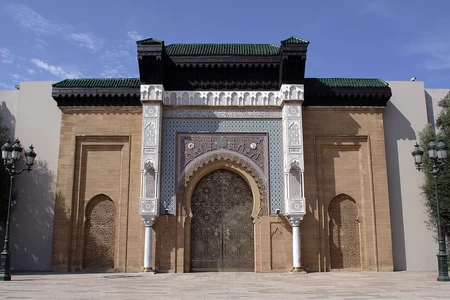
I'm willing to bet that there aren't many JetPunk members that don't know what Casablanca means. It is obviously White House, but why did it get that name?
The city was built on the site of another settlement, Anfa (meaning "hill") that was destroyed by an earthquake in 1755. There are several theories about why the new municipality was named White House. One theory is that a merchant settled with his wife known as "White Lady", and locals would buy their provisions at the House of the White.
Another theory suggests either a lighthouse or a distinctive building that sailors would navigate by. Up until the 19th century maps would mention a "White Tower" as a reference point for seafarers.
CASABLANCA = WHITE HOUSE
Nouadhibou ~ Mauritania
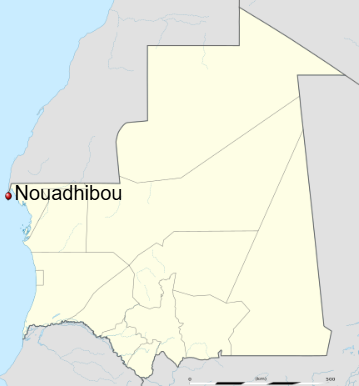
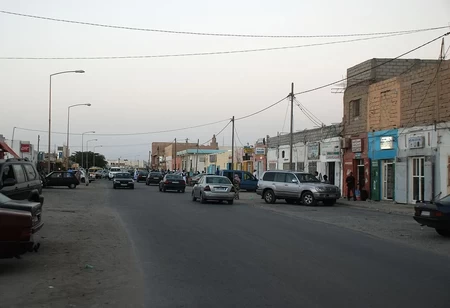
French colonists named this city as Port-Étienne after the former French Minister of the Colonies, Eugene Etienne. It is famous as the terminus of the alleged longest train in the world that transports iron ore from the mines over 600km away.
After the independence of Mauritania in 1960 the city was renamed Nouadhibou, which means "Place of the Jackal" due to a nearby watering hole frequented by jackals, obviously!
NOUADHIBOU = PLACE OF THE JACKAL
Mindelo ~ Cape Verde
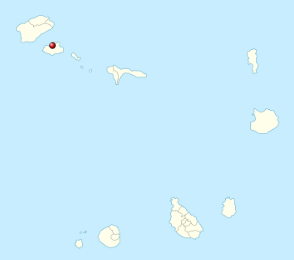
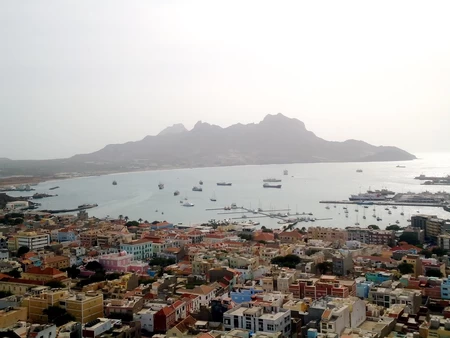
Mindelo is the settlements third name. Originally called Nossa Senhora da Luz, then renamed Leopoldina around 1820 in honour of the Queen Consort of Portugal.
In 1838, it was renamed Mindelo to commemorate the 1832 "Landing at Mindelo", a decisive point in the Liberal Wars of Portugal. The Mindelo in question is a region of Portugal north of Porto. It is proposed that the name of the original Mindelo derives from Menidello, a knight that settled in the area and battled Arab forces.
MINDELO = NAMED AFTER A PORTUGUESE BATTLE (IN AN AREA THAT WAS NAMED AFTER A KNIGHT)
Touba ~ Senegal
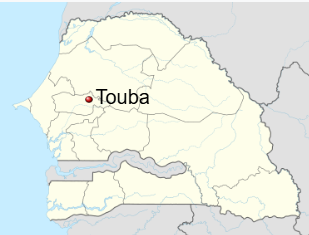
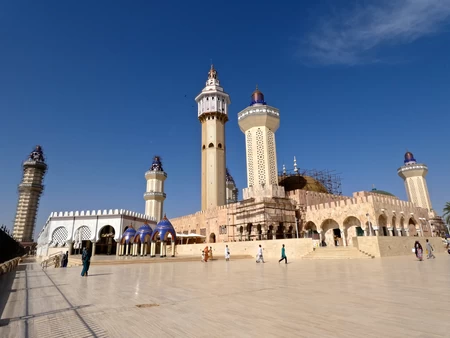
Touba is a sacred city in the Mouride religion and was a small hamlet until Cheikh Amadou Bamba, had a "cosmic vision of light" and founded the religion there. The Great Mosque was built shortly after his death.
According to the Encyclopaedia of Islam, the name, Touba, may have several origins but the most likely is from the Arabic word ṭūbā, meaning "blessing".
TOUBA = BLESSING
Brikama ~ Gambia
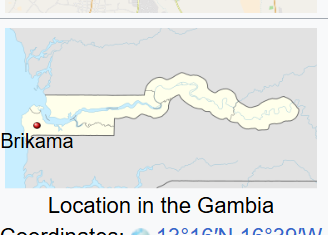
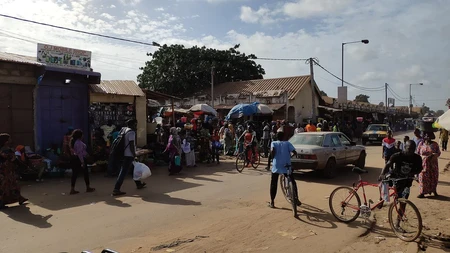
Brikama is known in Gambia as the centre of the wood carving industry and the birthplace of many famous local musicians. Locals know it as 'Satey Ba' which translates as Big Town.
According to the AccessGambia website the actual name of Birkama comes from the Gambian language, Bainunka, and means "Women's Town"
BIRKAMA = WOMEN'S TOWN
Gabu ~ Guinea-Bissau
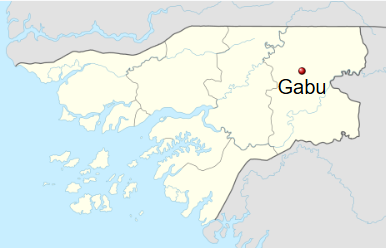
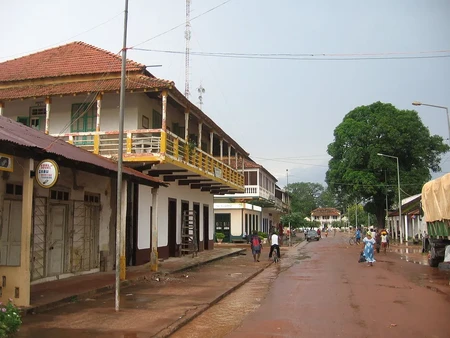
Gabu is mostly known as a market town, mainly trading in ceramics and agricultural products, it attracts buyers and sellers from surrounding countries as well as local tradesmen.
Originally called Kansala, and capital of the Kaabu Empire until 1867, when the Portuguese renamed it Nova Lamego. It was then renamed Gabu when Guinea-Bissau gained their independence in 1973.
The name Gabu commemorates the town's history as part of the Kaabu Empire.
GABU = NAMED AFTER THE KAABU EMPIRE
Sikasso ~ Mali
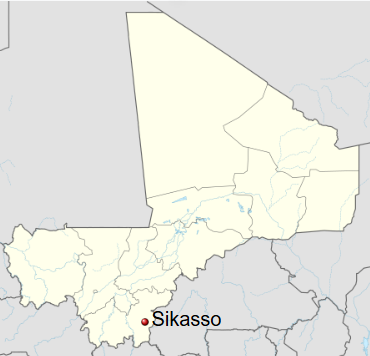
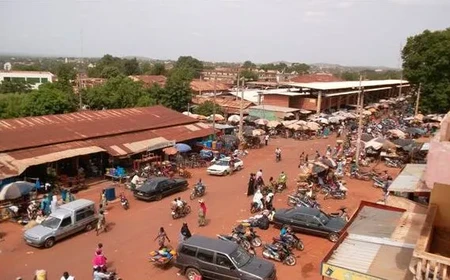
Sikasso is known as the "Green City", due to its lush vegetation, it is also known for its various music and cultural festivals that are held throughout the year. The city's mangos are also renowned as the best throughout Africa.
There is very little information online about the origins of the city name of Sikasso, well, when I say little I mean None! For want of a better definition I have translated Sikasso from the Bambara language of Mali into English and come up with....
SIKASSO = THE SWORD
Nzerekore ~ Guinea
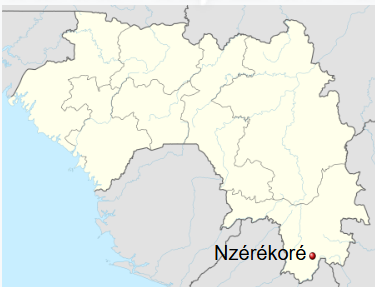
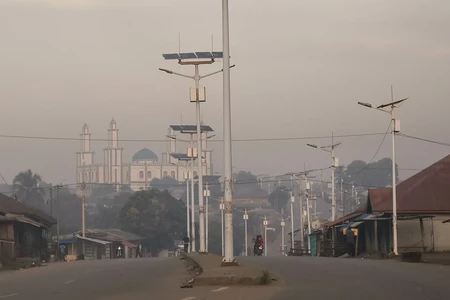
Nzérékoré, to give it its proper title, was the centre of the uprising against French rule in 1911. It has grown massively since the civil wars in neighbouring countries, presumably with the influx of refugees fleeing the fighting.
The city's name derives from the indigenous Guerze language and means "City of Hunters"
NZEREKORE = CITY OF HUNTERS
Kenema ~ Sierra Leone
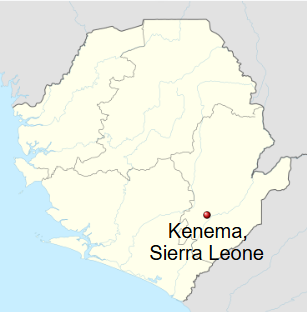
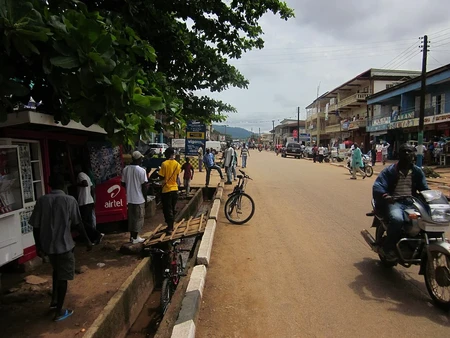
Kenema is one of Sierra Leone's most ethnically diverse cities, and is famous for nurturing some of the country's best international football players, that's soccer football, not the other one!
On a more serious note, it was also the first place in Sierra Leone to record an outbreak of Ebola Virus in 2014.
It took a little digging to find out the meaning of Kenema. I eventually found a blog by someone called Dick Simpson from Indiana University, here's a link, in which he states, "The name signified a town built in a clear, open place."
KENEMA = TOWN BUILT IN A CLEAR, OPEN SPACE
Buchanan ~ Liberia
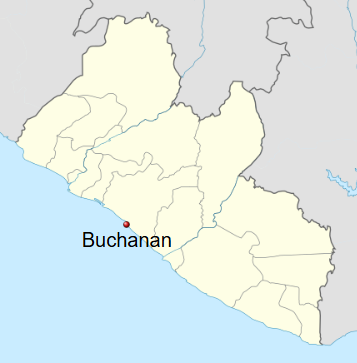
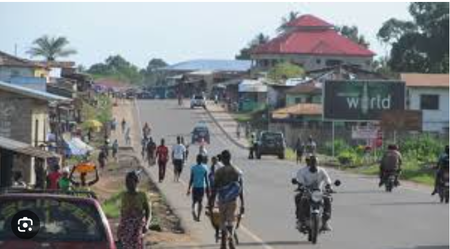
Buchanan is a port city that was the site of Port Cresson colony, the home to the first emigrants from the USA, mainly from New York and Pennsylvania. Life was tough and the community only survived due to the number of emigrants outweighing the number of deaths.
The town is named after Thomas Buchanan, cousin of US president James Buchanan.
BUCHANAN = NAMED AFTER THOMAS BUCHANAN
Summary
I must be getting better at this research malarky. Despite Wikipedia's lack of information about the smaller African cities, I managed to find the origins of the first fourteen "second cities". A couple of them took a little digging, but I think I only had to delve into the lower Google pages once or twice. I was distracted by several articles that sent me down a virtual rabbit hole on a number of occasions, but "knowledge is everything" as my old history teacher told me way back in 1976. (Thank you Mr. Hastings, I enjoyed your lessons immensely!)
So that's the first African section written and posted, the second will be along in a week or two, depending on how much delving and crawling out of rabbit holes I have to do.
Anyway, in the words of the Baird, William Shakespeare, “Parting is such sweet sorrow that I shall say goodnight till it be morrow.” (from Romeo and Juliet in case you're wondering!)
Nice to see African etymolgies! Very cool!
edit:
From Ottoman Turkish بنغازی (Bingâzi) and Arabic بِنْغَازِي (Binḡāzī), apparently from earlier مرسى بني غازي (“port of ibn Ghazi”) first attested on a 1579 map by Ali al-Sharfi. Possibly a reference to a Muslim holy man Sidi ibn Ghazi. "Ibn Ghazi" itself can literally be translated as "son of the ghazi (warrior)".
wiktionary!
Theres prolly a english-bambara dictionary you can try somewhere. I couldnt find it on one. Might need to search other languages/arabic
Objectively the greatest name that a city could have. Thanks for bringing these to us toowise!
Se (arrive) + ka (our) + so (home)
So meaning Arrive (at) our home as this was created as the new capital of a kingdom in Mali.
Se can also mean victory so could mean Victory (at) our home.